
What is the shoulder labrum?
The shoulder is a ball-and-socket joint. The ball is the top of the arm bone (the humeral head), and the socket is a shallow, saucer-shaped surface on the shoulder blade called the glenoid. Because the socket is so shallow, the shoulder relies heavily on the soft tissues around it to stay centered.
The labrum is a ring of tough, rubbery tissue that runs around the rim of the glenoid. It deepens the socket and serves as the attachment point for the long head of the biceps tendon and for the ligaments that hold the front of the shoulder together, the glenohumeral ligaments.1 Together these structures, along with the rotator cuff, help keep the ball centered in the socket.2
The labrum also helps the shoulder in a less obvious way. An intact labrum seals the rim of the socket and creates a small amount of negative pressure inside the joint, a “suction cup” effect that resists the ball sliding out of position. In a laboratory study of cadaver shoulders, this suction cup effect was present with an intact labrum and disappeared once the labrum was removed, and tears of the back-top portion of the labrum reduced the shoulder's resistance to being pushed forward.3
The upper (superior) half of the labrum is different from the lower half. The lower labrum is firmly attached to the bone and acts like a bumper. The upper labrum is more loosely attached and more mobile, and it works together with the biceps tendon like a tension band that helps stabilize the shoulder through its range of motion.4 This difference in structure is one reason the upper labrum is prone to a specific pattern of injury.
The upper labrum also has a relatively poor blood supply. Blood flow to the labrum comes from several small arteries, but it is decreased in the front, front-top and top portions of the labrum, which makes these areas more vulnerable to injury and slower to heal.5,6
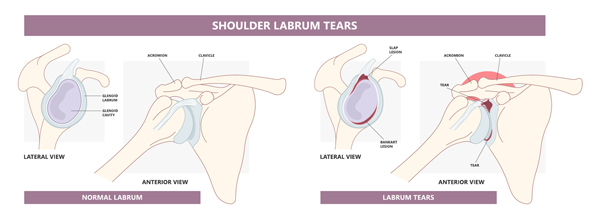
Figure 1. The normal shoulder labrum (left) and examples of labral tears (right), including a SLAP lesion at the top of the socket where the biceps tendon attaches and a Bankart lesion at the front-bottom of the socket. (Licensed from Adobe Stock.)
What is the biceps tendon, and how is it connected to the labrum?
The biceps muscle has two tendons at the shoulder. The long head of the biceps tendon travels from the elbow up a groove in the front of the arm bone, enters the shoulder joint, and attaches to the very top of the socket. Roughly half of its fibers attach to a small bump of bone at the top of the glenoid (the supraglenoid tubercle), and the rest blend into the labrum in front of and behind that point.5,6 Because the tendon and the top of the labrum are joined together, they are often referred to as a single unit, the biceps-labral complex.7
Exactly how the biceps tendon attaches varies from person to person. In most shoulders the tendon blends mainly into the back half of the upper labrum, while in others it attaches equally to the front and back.5 In one study of 669 shoulders, the attachment was equally distributed in 84.4% of shoulders, mostly posterior in 12.1% and entirely posterior in 3.4%.8
The biceps-labral complex matters for two reasons. First, it contributes to the stability of the shoulder. Laboratory work suggests that the long head of the biceps helps absorb stress and limit movement of the ball in the socket during throwing,9 and cutting or moving the tendon changes the mechanics of the shoulder in cadaver models.10 Second, it is a common source of pain. The long head of the biceps is densely supplied with sensory nerve fibers and is considered a significant source of pain in the front of the shoulder.11 Pain-transmitting nerve fibers have also been identified at the biceps anchor itself, where the tendon joins the labrum, with the greatest density in the front-top portion of the labrum.12,13 This is important when deciding how to treat a SLAP tear, as discussed later in this guide.
What is a SLAP tear?
SLAP stands for Superior Labrum, Anterior to Posterior. A SLAP tear is a tear of the top part of the labrum, at the point where the biceps tendon attaches, that extends from the front (anterior) of that attachment toward the back (posterior).1 Injuries in this region were first described in throwing athletes by Andrews and colleagues in 1985, and the term SLAP lesion was introduced by Snyder and colleagues in 1990.14
In the most common and most clinically important type of SLAP tear, the labrum and the attached biceps tendon pull away from the bone at the top of the socket, leaving the biceps anchor unstable.5,6 The different types of SLAP tears are described in detail below.
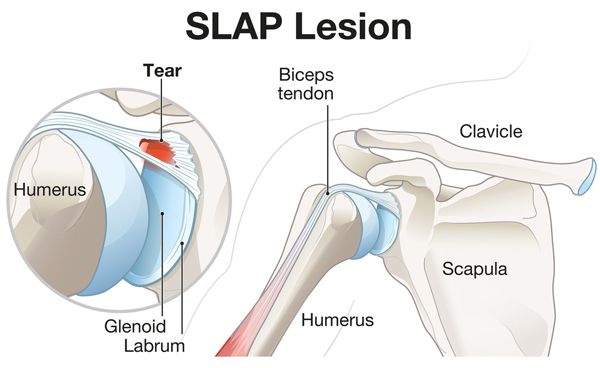
Figure 2. A SLAP tear. The close-up view (left) shows the tear in the upper labrum where the biceps tendon attaches to the top of the socket (glenoid). The view on the right shows where this sits in the shoulder, with the biceps tendon running from the top of the socket down the front of the arm. (Licensed from Adobe Stock.)
How common are SLAP tears?
SLAP tears are common. In the original arthroscopic studies, a SLAP tear was found in roughly 4% to 12% of shoulders undergoing arthroscopy, and more recent studies report rates as high as 26%.1 In one series of 2,375 shoulder arthroscopies, 6% revealed a SLAP lesion.5 SLAP tears account for 1% to 3% of all sports medicine referrals, are about three times more common in men than in women, and are most often seen in people in their twenties and in their forties.15
An equally important point is that SLAP tears are very frequently found in people who have no symptoms. In middle-aged adults, SLAP tears have been seen on MRI in as many as 72% of shoulders that have no pain at all. Among elite overhead athletes, 46% of asymptomatic US Olympic volleyball players and 48% of baseball pitchers have evidence of a SLAP tear on MRI.6 In throwers, some degree of separation of the upper labrum may actually be an adaptation to throwing that allows the arm to reach the extreme positions needed for velocity.4
This means that a SLAP tear seen on an MRI is not automatically the cause of a patient's pain. In a survey of 92 shoulder experts, the panel concluded that the presence of a SLAP tear on MRI alone does not warrant surgery.11 Part of my job is determining whether a SLAP tear that is visible on your MRI is actually the source of your symptoms.
SLAP tears also commonly occur alongside other shoulder injuries. In one review of 139 SLAP lesions, 88% had another shoulder problem at the same time. Type II tears in patients 40 or younger were associated with Bankart (front-bottom labral) tears, while those in patients over 40 were associated with rotator cuff tears and arthritis.5 SLAP tears are frequently found with shoulder dislocations,16,17 rotator cuff tears,18 tears elsewhere in the labrum,19,20 and even separations of the acromioclavicular (AC) joint.21
How is the superior labrum injured?
SLAP tears can result from a single injury, from repetitive overuse, or from gradual wear with age.22 Several mechanisms have been described5,15:
- Traction. A sudden pull on the arm, such as catching a heavy falling object or being yanked by a dog leash, can pull the biceps tendon and labrum off the top of the socket. This has been described as a “weed pulling” type of injury.4
- Compression. A fall onto an outstretched arm can drive the ball of the shoulder up into the socket and crush or shear the upper labrum.15
- Repetitive overhead activity. Throwing and other overhead sports place enormous, repeated forces on the biceps-labral complex.5
- Degeneration. As with other tissues in the body, the labrum wears with age, and fraying and separation of the upper labrum become increasingly common in middle age.4,22
In throwing athletes, the most widely accepted explanation is the “peel-back” mechanism. When the arm is cocked back to throw, in maximum external rotation, the biceps tendon twists and pulls backward on the upper labrum, gradually peeling it off the bone.5,23 Laboratory studies support this: the biceps anchor is significantly weaker when it is loaded from behind, as happens in the late cocking phase of throwing.5 A second mechanism is traction during the deceleration phase, after the ball is released, when the labrum is better able to withstand compression than the shear and pulling forces placed on it.23
Throwers frequently develop tightness in the back of the shoulder capsule and a loss of internal rotation, often called GIRD (glenohumeral internal rotation deficit). This changes the point at which the ball contacts the socket and increases the peel-back force on the upper labrum.2 Weakness or poor control of the shoulder blade (scapular dyskinesis) and poor mechanics in the legs and trunk, which normally generate more than half of the energy of a throw, can add further stress.23
What are the symptoms of a SLAP tear?
The symptoms of a SLAP tear are often vague. The most common complaint is pain, typically described as a deep, aching pain inside the shoulder, and it may be felt toward the back of the shoulder.4,6 Pain may also be felt in the front of the shoulder, which can overlap with pain from the biceps tendon itself.5
Pain is typically worse with heavy lifting, pushing, throwing and overhead activities, but these features are also common to many other shoulder problems.5 Other symptoms include:
- Catching, locking, popping, clicking or grinding in the shoulder.4,6
- A sense that the shoulder is unstable or “slipping,” particularly when the tear is associated with a dislocation.14
- In throwing athletes, a loss of velocity and control, and a feeling sometimes described as a “dead arm.”4
- Weakness, which may indicate an associated rotator cuff tear or, less commonly, a cyst pressing on a nerve (discussed later in this guide).4
Some patients remember a specific moment when they felt a pop in the shoulder. Others have no specific injury, and symptoms develop gradually. Occasionally there is a delay between the injury and the start of symptoms.2
How is a SLAP tear diagnosed?
A SLAP tear is one of the more difficult shoulder injuries to diagnose. There is no single symptom or examination finding that is specific for a SLAP tear, and the picture is further complicated by how often SLAP tears occur together with other shoulder problems.14 For this reason, I use the history, physical examination and imaging together, and the final diagnosis is sometimes made only at the time of arthroscopy.5
Physical examination
During the examination I will check your range of motion in both shoulders, including internal and external rotation with the arm out to the side, look at how your shoulder blade moves, test the strength of the rotator cuff, and press over the biceps tendon in the front of the shoulder.4 I will then perform several provocative tests that load the upper labrum and biceps anchor, such as the O'Brien (active compression), crank, anterior slide, Speed and Yergason tests and the dynamic labral shear test.22,24
None of these tests is accurate enough on its own.5 A meta-analysis of 18 studies found that the dynamic labral shear, O'Brien and crank tests were the most sensitive (best at not missing a tear), while the Yergason, anterior slide and Kim tests were the most specific (best at confirming a tear). Accuracy improved when tests were combined, which more closely reflects how the examination is actually performed in clinic.22 The O'Brien test, which was originally designed to detect SLAP tears, has in one large series actually been more useful for identifying tears of the back-bottom labrum than SLAP tears.25 Pain with pressure over the biceps groove and positive biceps tests help determine whether the biceps tendon is a major source of pain, which influences treatment.6
X-rays
X-rays do not show the labrum and are usually normal in patients with a SLAP tear. They are obtained to look for other causes of pain, such as arthritis.2,6
MRI and MR arthrogram
MRI is the most common advanced study used to evaluate the labrum. MRI is good at confirming a SLAP tear when it shows one, but it is less reliable at ruling one out. A 2025 meta-analysis of 33 studies including 2,916 patients found that MRI had a pooled sensitivity of 77% and a specificity of 94%, meaning MRI can miss a meaningful number of tears.26 Smaller studies have reported even lower sensitivity for standard MRI.27,28
An MR arthrogram, in which a contrast dye is injected into the shoulder before the MRI, distends the joint and outlines the labrum more clearly. It is generally considered the most accurate imaging test for SLAP tears.1 One review reported sensitivity and specificity of 63% and 87% for MRI, improving to 80% and 91% with an MR arthrogram.6 Higher-strength (3-Tesla) magnets also appear to improve accuracy.1 Not every study shows an advantage of the arthrogram; in a study of 340 adolescents and young adults undergoing stabilization surgery, there was no significant difference between MRI and MR arthrogram, and the imaging report fully described the condition of the labrum only 63% of the time.29
Reading the upper labrum on MRI is challenging in part because of normal anatomic variations, which can look like tears. The most common is the sublabral recess, a small normal gap between the labrum and the cartilage at the top of the socket, which has been found in 73% of shoulders in cadaver studies and becomes more common with age. Other variations include the sublabral foramen, a normal hole beneath the front-top labrum seen in 11% to 17% of people, and the Buford complex, in which the front-top labrum is absent and replaced by a thick, cord-like ligament.1 In a series of 3,129 shoulder arthroscopies, the Buford complex was found in 2.65% of shoulders, and SLAP tears were far more common in shoulders that had one.30,31 Some of these variants are also associated with a higher rate of labral tears.32 Recognizing them matters because mistakenly “repairing” a normal variant such as a Buford complex can cause pain, stiffness and loss of rotation.33
Ultrasound is excellent for evaluating the rotator cuff and biceps tendon, but it cannot reliably image the upper labrum.1 A small pilot study has shown that high-resolution ultrasound may agree well with MR arthrography for SLAP tears,34 and researchers are also developing artificial intelligence tools to help read shoulder MRIs for SLAP tears.35,36 At present, these remain investigational.
Arthroscopy
Arthroscopy, looking directly into the shoulder with a small camera, remains the gold standard for diagnosing a SLAP tear.1,26 At arthroscopy I can see the labrum, probe the biceps anchor to judge whether it is stable, and watch how the labrum and biceps behave as the arm is moved. Even so, surgeons do not always agree with one another when classifying SLAP tears from arthroscopic video,37 or from MR arthrogram images,38 which reflects how difficult these injuries can be to categorize.
What are the different types of SLAP tears?
SLAP tears are classified by their appearance at arthroscopy. Snyder's original classification described four types, and the system has since been expanded to ten types.6,14
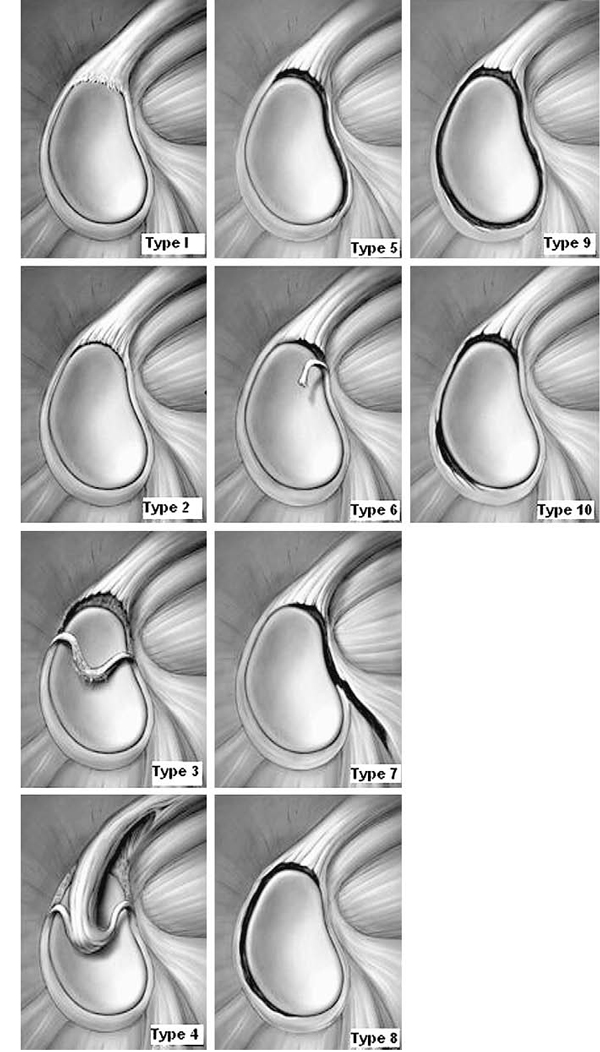
Figure 3. Comprehensive classification of SLAP tears, types I through X. Types I to IV are Snyder’s original description; types V to X describe tears that extend into other parts of the labrum, capsule or ligaments. (Modified from Powell SE, Nord KD, Ryu RKN. The diagnosis, classification, and treatment of SLAP lesions. Oper Tech Sports Med. 2004;12:99-110.)
Table 1. Types of SLAP tears.
| Type | Description |
|---|---|
| I | Fraying and wear of the upper labrum; the labrum and biceps anchor remain attached. |
| II | The upper labrum and biceps anchor are detached from the top of the socket. Subtypes describe extension toward the front (A), back (B), or both (C). This is the most common type treated. |
| III | Bucket-handle tear of the upper labrum that can flip into the joint; the biceps anchor remains attached. |
| IV | Bucket-handle tear that extends up into the biceps tendon. |
| V | Tear that combines a SLAP tear with a Bankart (front-bottom) tear, typically after a dislocation. |
| VI | Type II tear with an unstable flap of labrum. |
| VII | SLAP tear that extends into the middle glenohumeral ligament. |
| VIII | SLAP tear that extends into the back of the labrum. |
| IX | Tear that extends around the entire rim of the socket (circumferential). |
| X | SLAP tear that extends into the rotator interval or is combined with a back-bottom labral tear. |
Data from references 6, 14.
Type I tears are wear-related fraying and generally do not need repair. Type II tears are the most common type requiring treatment and are the focus of most of the research on SLAP tears.6,15 Types V and VIII are part of a pattern of shoulder instability and are generally treated in the same way as other unstable labral tears.6
What are the treatment options for a SLAP tear?
Treatment is individualized. The factors I consider include your age, your sport or occupation and the demands you place on your shoulder, whether there was a specific injury, the type of tear, whether the shoulder is unstable, whether the biceps tendon itself appears to be a source of pain, and whether there are other problems in the shoulder such as a rotator cuff tear.5,11
Nonoperative treatment
For most SLAP tears, the first line of treatment is nonoperative. Because many SLAP tears seen on MRI cause no symptoms at all, every effort should be made to treat symptoms without surgery first.6 SLAP tears have not been shown to cause arthritis or deterioration of the shoulder, and the main reason to proceed with surgery is failure of nonoperative treatment.5
Nonoperative treatment includes rest from aggravating activities, anti-inflammatory medication, physical therapy and, in some cases, an injection.2,11 Physical therapy focuses on the mechanics of the shoulder blade and strengthening the muscles that dynamically stabilize the shoulder.6 In throwers, therapy addresses GIRD with stretching of the back of the shoulder, such as the “sleeper stretch,” as well as rotator cuff, shoulder blade and core strengthening.2,23 A corticosteroid injection into the joint can reduce pain and inflammation, and an injection into the biceps tendon sheath can help determine how much of the pain is coming from the biceps tendon.11
Nonoperative treatment works for a substantial portion of patients. In a systematic review of 244 athletes with SLAP tears treated without surgery, 53.7% returned to play. Among athletes who were able to complete their rehabilitation program, however, 78% returned to play, and 72% returned to their prior level of performance. Return to play generally occurred in less than six months. Patients who abandoned therapy in favor of surgery had attended an average of 8 therapy sessions, compared with 20 sessions in patients whose nonoperative treatment was successful.39 In other words, giving therapy a fair trial matters.
Nonoperative treatment is less likely to succeed in patients who are older, overhead athletes (especially baseball pitchers), patients whose tear resulted from a specific traumatic injury, patients with mechanical symptoms such as catching, and patients with an associated rotator cuff tear.5,39
Surgical treatment
Surgery is considered when symptoms persist despite a reasonable course of nonoperative treatment. Surgeons are least likely to recommend surgery for patients who have not yet tried nonoperative treatment, and more likely to recommend it for type III and IV tears, failed nonoperative treatment, pain with overhead activity, high activity levels and an injury history consistent with a SLAP tear.40 Surgery may also be considered earlier when a SLAP tear is part of a shoulder that is dislocating or unstable.6
It is important to have realistic expectations. In a well-known randomized trial from Norway, 118 patients with an isolated type II SLAP tear were randomly assigned to labral repair, biceps tenodesis or a sham (placebo) operation, and all received the same physical therapy afterward. There was no difference between the three groups in pain and function.41 This does not mean that surgery never helps, and many of the studies discussed below show substantial benefit in selected patients, but it does emphasize the importance of careful patient selection and of a full trial of rehabilitation before surgery.
When surgery is chosen, the main options are debridement (cleaning up the frayed labrum), SLAP repair (reattaching the labrum and biceps anchor to the bone), and biceps tenodesis or tenotomy (treating the biceps tendon rather than repairing the labrum). How I choose between these is discussed in the next sections.
How is SLAP surgery performed?
All SLAP procedures begin with a shoulder arthroscopy, performed under general anesthesia, usually combined with a nerve block. Several small incisions are made around the shoulder, a camera is placed through one, and instruments are placed through the others. The entire joint is inspected, and the labrum and biceps anchor are probed to determine whether the anchor is stable or detached. Any additional problems such as a rotator cuff tear or a tear elsewhere in the labrum are identified and treated.2,6
Arthroscopic debridement
For type I tears, and for frayed but stable labral tissue, the torn and frayed tissue is trimmed with a small motorized shaver back to a stable edge, without the need for a repair.5,15 For type III bucket-handle tears in which the biceps anchor is intact, the unstable fragment is usually removed.5
Arthroscopic SLAP repair
In a SLAP repair, the frayed edges of the tear are cleaned, and the bone at the top of the socket where the labrum attaches is lightly roughened to create a bleeding surface that encourages healing. Small suture anchors, typically two to three, are placed into the bone at the rim of the socket. The suture from each anchor is passed around the labrum and tensioned so that the labrum and biceps anchor are pulled back down to the bone.6
I use knotless, all-suture anchors. Knotless constructs avoid a knot sitting on the labrum; poorly placed anchors and suture knots are a well-documented cause of persistent pain after repair.43 Anchors are placed primarily behind the biceps attachment, and care is taken not to over-tighten the repair or capture the capsule, because over-tensioning the top of the labrum can restrict external rotation and cause stiffness and pain.2,6 When an anchor is placed in front of the biceps, this needs to be done thoughtfully, as an anterior anchor has been shown to have the greatest effect on limiting rotation in some laboratory studies.5
If the tear extends into the back of the labrum (type VIII) or into the front-bottom labrum after a dislocation (type V), additional anchors are placed to repair the entire tear.6,44,45
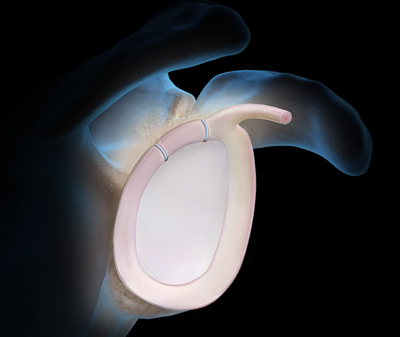
Figure 4. A SLAP repair, viewed looking straight into the shoulder socket. The torn upper labrum has been reattached to the rim of the socket with small suture anchors placed in the bone, restoring the attachment of the labrum and biceps tendon. (Credit- Arthrex.com.)
Biceps tenodesis
A biceps tenodesis takes the strain off the biceps anchor rather than repairing it. The long head of the biceps tendon is released from its attachment inside the joint, and the torn or frayed labrum is debrided. The tendon is then reattached lower down on the arm bone, outside the joint.6 This removes the painful biceps anchor and the portion of the biceps tendon that runs in the groove from the equation, while preserving the length, contour and function of the biceps muscle.
There are two common ways to perform a tenodesis. In a subpectoral tenodesis, a small (about 3 cm) incision is made in the front of the upper arm at the lower border of the pectoralis major (chest) muscle, and the tendon is fixed into a small hole in the bone with an implant such as a cortical button or interference screw.6 In an arthroscopic suprapectoral tenodesis, the tendon is fixed higher up, above the chest muscle, through the arthroscopic portals.46,47 A randomized trial comparing these two techniques found no difference in clinical outcomes at a minimum of two years.48 A systematic review of 43 studies including 11,113 patients found that both techniques improved outcomes. Stiffness was somewhat more frequent after the arthroscopic technique (2.5% versus 1.4%), whereas wound infection (1.1% versus 0.5%) and nerve-related complications (1.1% versus 0.2%) were more frequent after the open technique.49
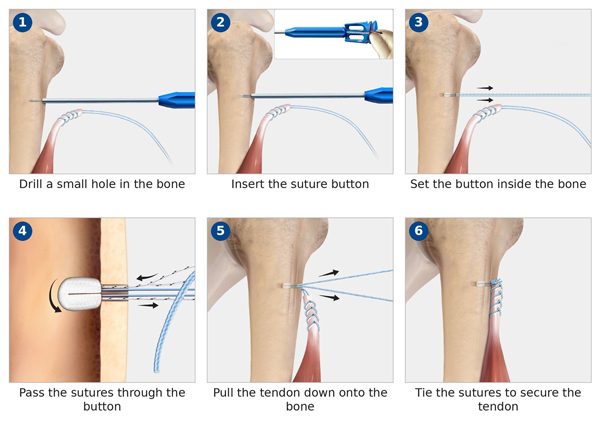
Figure 5. Subpectoral biceps tenodesis using an all-suture button. (1) Through a small incision below the chest muscle, a small hole is drilled through the near wall of the arm bone (humerus). (2, 3) A small all-suture button is inserted through the hole and set against the inside of the bone. (4) The sutures that have been woven through the end of the biceps tendon are passed through the button. (5) Pulling on the sutures draws the tendon down onto the bone, and (6) the sutures are tied to hold the tendon in place while it heals to the bone. (Credit- Arthrex.com.)
The alternative to a tenodesis is a tenotomy, in which the tendon is simply released and allowed to retract down the arm without being reattached. Tenotomy is quicker and avoids the incision, and in randomized trials patient-reported outcomes are similar. However, cosmetic deformity of the arm, the so-called “Popeye” deformity where the muscle bunches up in the lower arm, occurred in 23.3% of tenotomy patients compared with 6.8% of tenodesis patients.50 I generally reserve tenotomy for older, lower-demand patients.
Combined SLAP repair and biceps tenodesis
Occasionally a SLAP repair and a biceps tenodesis are performed together, for example in a young, high-demand patient with a large unstable labral flap or a tear that extends well into the biceps anchor, where repair restores the labrum and the tenodesis takes stress off the repair.6
SLAP tears with a paralabral cyst
A tear in the labrum can act like a one-way valve, allowing joint fluid to escape and form a cyst next to the labrum (a paralabral cyst). When this cyst sits in a small notch on the back of the shoulder blade (the spinoglenoid notch), it can press on the suprascapular nerve and cause weakness and wasting of the infraspinatus muscle, one of the rotator cuff muscles.51-53 Some cysts resolve on their own without surgery,54 but when surgery is needed, a systematic review of 206 patients found excellent results whether the labrum was repaired alone or the cyst was also decompressed, with the cyst resolving in more than 92% of patients in both groups.55 Decompressing the cyst combined with a biceps tenodesis has shown similar results to cyst decompression with labral repair.56
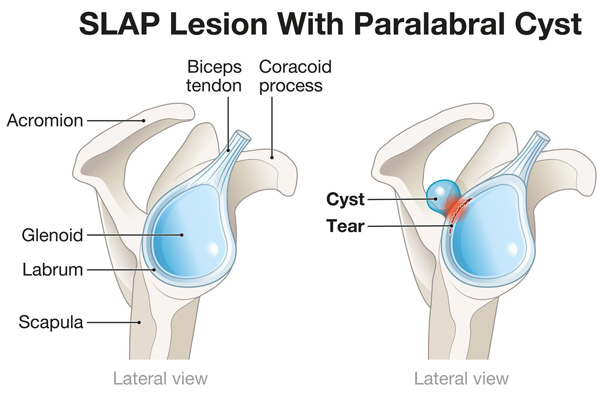
Figure 6. A SLAP tear with a paralabral cyst, viewed from the side of the shoulder blade. The normal socket and labrum are shown on the left. On the right, joint fluid has escaped through the labral tear to form a cyst next to the labrum, where it can press on the nearby suprascapular nerve. (Licensed from Adobe Stock.)
Should I have a SLAP repair or a biceps tenodesis?
This is the central question in the surgical treatment of SLAP tears, and it remains an area of genuine debate. The single most important factor in this decision is age, followed by activity level and the specific demands you place on your shoulder.11
Over the past fifteen years, the treatment of SLAP tears has shifted substantially away from repair and toward biceps tenodesis. In a large US insurance database, isolated SLAP repair decreased by 69.3% between 2007 and 2016, while biceps tenodesis for SLAP tears increased by 370%.57 Similar trends have been reported in other US databases58-60 and internationally.61 This shift was driven by evidence that SLAP repair produces less reliable results in older patients, along with growing evidence of good results with tenodesis.6
Patients older than 30 to 40 years
In older patients, the evidence favors treating the biceps rather than repairing the labrum. Patients over 40 often experience more residual pain and stiffness after SLAP repair.11 In one series of 179 patients, those older than 36 had roughly 3.4 times the risk of failure after SLAP repair.2,43 In patients over 40 with high activity levels whose SLAP repair failed, the outcomes of the repair were unsatisfactory, while a subsequent tenotomy improved pain and function.62 In the NEER Circle expert consensus, treating the biceps was the preferred approach for patients older than 30 with lower activity levels, and SLAP repair was consistently considered unacceptable for patients older than 30 in multiple scenarios.11 An expected-value decision analysis pooling 23 studies found a “well” outcome in 87.8% of patients after tenodesis compared with 62.9% after repair.63
Younger patients and athletes
In younger, active patients, the decision is less clear. Both procedures produce good results in many young patients, and a systematic review of studies limited to patients under 40 found no significant difference between tenodesis and repair in return to play (78.5% versus 67.7%), functional scores, or reoperation rates (2.9% versus 10.7%).64 In young overhead athletes under 35, both procedures provided excellent results, although more patients reported modifying their sport because of weakness after tenodesis.65 In a comparison limited to patients under 30, there was no difference in functional outcomes or return to play between the two procedures, although 11.5% of repairs required a revision operation compared with none of the tenodeses.66,67
However, some long-term data in young, active patients favor tenodesis. In active-duty military patients younger than 35, patients treated with tenodesis had less pain and better function than those treated with repair at a minimum of five years, and 20% of repairs failed compared with none of the tenodeses.68 At a minimum of ten years in the same population, 40% of SLAP repairs had failed and were revised to a tenodesis, while none of the patients treated with tenodesis needed revision.69
For young throwing athletes, and particularly pitchers, many surgeons, including most team physicians in professional baseball, still favor SLAP repair, because the biceps-labral complex contributes to the stability of the throwing shoulder.6,11,23 In a survey of Major League Baseball physicians, 93% said they would repair a type II SLAP tear in a baseball player.11 Biomechanical modeling suggests that the loss of the biceps can be compensated by the rotator cuff in most overhead sports but not in baseball pitching.70
My general approach is consistent with the current expert consensus. I favor SLAP repair in younger patients, typically under 30, who have a true traumatic tear with an unstable biceps anchor, mechanical symptoms or instability, and a healthy-appearing biceps tendon. I favor biceps tenodesis in patients older than 30 to 35, in patients whose examination or injection response suggests the biceps tendon is a major pain generator, in patients with degenerative or frayed tissue, in patients with an associated rotator cuff tear, and after a failed prior SLAP repair.6,11,23 SLAP tears that are part of shoulder instability (types V and VIII) are repaired.6 The final decision is often confirmed at the time of arthroscopy, so we will discuss both possibilities before surgery.2
Table 2. General approach to SLAP tears by tear type.
| Type | Usual surgical treatment |
|---|---|
| I | Nonoperative treatment or arthroscopic debridement |
| II | SLAP repair in young, active patients; biceps tenodesis or tenotomy in older or lower-demand patients |
| III | Removal of the unstable bucket-handle fragment |
| IV | SLAP repair, or biceps tenodesis/tenotomy if more than 50% of the biceps tendon is involved |
| V | Bankart repair and SLAP repair |
| VI | Removal of the flap and SLAP repair |
| VII | Repair of the front-top labrum and SLAP repair |
Data from reference 5 (treatment algorithm proposed by Brockmeyer et al).
What are the outcomes of SLAP surgery?
Most patients improve after SLAP surgery, but the results are less predictable than for many other shoulder operations, and outcomes depend heavily on age, activity and the procedure performed.
Outcomes after SLAP repair
In appropriately selected patients, SLAP repair produces good results. More than 80% of patients report “great” or “excellent” satisfaction in several studies, and acute traumatic injuries seem to do better than chronic wear-and-tear tears.15 In a series of 122 patients followed for a minimum of five years after SLAP repair, the mean satisfaction was 87.7%, and 10.7% had a further operation, most commonly a biceps tenodesis.71 In a group of 69 military patients followed for more than eight years after repair, at least 85% achieved the minimum clinically important improvement, but only about half to two-thirds reached an “acceptable” symptom state.72
Repairs of SLAP tears that are part of shoulder instability do well. In a systematic review of 451 shoulders with type V tears, 84.8% of athletes returned to play, the reoperation rate was 6.1%, and the recurrent dislocation rate was 8.2%; adding the SLAP repair to the Bankart repair did not increase pain or the risk of recurrence.45 Type VIII repairs in military patients similarly showed large improvements in pain and function at eight years.44
Outcomes after biceps tenodesis
Biceps tenodesis provides reliable pain relief and high satisfaction, particularly in older patients. In a meta-analysis of randomized trials, tenodesis and tenotomy produced similar improvements in pain and function.50 In active military patients with a mean age of 42.6 years, subpectoral tenodesis significantly improved outcomes in patients with type II SLAP tears.73
Reoperation
Large insurance-database studies consistently show slightly higher reoperation rates after SLAP repair than after tenodesis. In one study of 16,186 patients, 6.8% of SLAP repairs required reoperation within two years, compared with 5.7% of tenodeses, and patients aged 40 to 49 had the highest revision rate.58 In another, SLAP repair carried 1.45 times the odds of an arthroscopic reoperation within two years.59 A study of more than 30,000 matched patients found that SLAP repair patients were 1.8 times more likely to undergo revision than arthroscopic tenodesis patients (2.9% versus 1.6%).74 Not all studies agree; one large database study found similar three-year reoperation rates of 11.5% after repair and 13.0% after tenodesis.75
Table 3. Reported outcomes after surgical treatment of SLAP tears.
| Outcome | SLAP repair | Biceps tenodesis | Source |
|---|---|---|---|
| Return to sport, systematic review (type II tears) | 79.5% | 84.5% | Abdul-Rassoul et al |
| Return to preinjury level of sport | 63.6% | 78.6% | Abdul-Rassoul et al |
| Return to play, patients under 40 | 67.7% | 78.5% | Hurley et al |
| Reoperation, patients under 40 | 10.7% | 2.9% | Hurley et al |
| “Well” outcome, pooled from 23 studies | 62.9% | 87.8% | Recker et al |
| Reoperation within 2 years, national database | 6.8% | 5.7% | Truong et al |
| Revision within 1 year, matched cohort | 2.9% | 1.6% (arthroscopic) | Linscheid et al |
| Failure at minimum 10 years, military under 35 | 40% | 0% | Scanaliato et al |
| Mean satisfaction at minimum 5 years | 87.7% | - | Hurley et al |
Data compiled from references 58, 63, 64, 69, 71, 74, 76.
When can I return to sports after SLAP surgery?
Most athletes return to sport after SLAP surgery, but not all return at the same level, and overhead throwers have the most difficulty. In a 2025 systematic review of 42 studies and 1,759 patients after SLAP repair, the overall rate of return to sport was 77.5%, with 68.2% returning to the same level at a mean of 8.2 months. In overhead athletes, 69.9% returned to play and 55.5% returned to their preinjury level. In collision and contact athletes, 77.2% returned and 70.2% returned to their preinjury level. Among military personnel, 83.4% returned to duty at a mean of 4.4 months.77
Comparisons between procedures should be interpreted carefully, because patients who undergo tenodesis tend to be older. In a systematic review of 501 athletes with type II SLAP tears, 79.5% returned to sport after SLAP repair and 84.5% after biceps tenodesis, and 63.6% and 78.6%, respectively, returned at their preinjury level; the tenodesis patients averaged 42 years of age compared with 31 years for the repair patients.76 In the 2025 review, a direct comparison of studies that included both procedures found no significant difference in return to play.77
After biceps tenodesis, 70% of overhead athletes returned to sport in one systematic review.78 In a series of 44 overhead athletes, 81.8% returned to their sport after tenodesis at an average of 8.7 months,79 and in a series of competitive overhead athletes, 81% returned to their previous level at an average of 4.1 months.80 Among collegiate gymnasts treated with tenodesis for SLAP tears, patient-reported outcomes were excellent and 62% returned to their prior level of gymnastics.81 Results are less favorable in professional baseball. In one study of professional players treated with tenodesis, only 35% returned to their prior level of play, and the rate was particularly low in pitchers.5,6
In professional baseball, 81% of pitchers and 82% of position players returned to sport after isolated SLAP repair, requiring on average 9 to 11 months, and those who returned did not experience significant changes in their performance statistics.82 Among adolescent baseball players, 75.6% returned to play, beginning to throw at an average of 5.9 months and returning to full competition at an average of 11.3 months.83
Psychological readiness plays a major role in returning to sport. In a study of 209 athletes, those who returned to play were far more likely to pass a test of psychological readiness than those who did not (82.3% versus 10.1%). Fear of reinjury and a feeling of instability were the most common reasons contact athletes did not return, while persistent pain was the most common reason among overhead athletes.84
As a general guideline, return to sport is not permitted until approximately four to six months after surgery, and return to competitive throwing usually takes longer, often seven to twelve months.2,15,23,82,83 Return is based on meeting functional milestones rather than on time alone: full or nearly full range of motion, at least 80% of preinjury strength, pain-free play at submaximal effort, and completion of a sport-specific progression.15
Table 4. Return to sport after SLAP surgery.
| Population and procedure | Rate | Timing |
|---|---|---|
| All athletes, SLAP repair (42 studies) | 77.5% overall; 68.2% same level | Mean 8.2 months |
| Overhead athletes, SLAP repair | 69.9% overall; 55.5% same level | - |
| Collision/contact athletes, SLAP repair | 77.2% overall; 70.2% same level | - |
| Military, return to duty, SLAP repair | 83.4% overall; 81.7% same level | Mean 4.4 months |
| Professional baseball, SLAP repair | 81% pitchers; 82% position players | 9 to 11 months |
| Adolescent baseball, SLAP repair | 75.6% | Full competition at 11.3 months |
| Overhead athletes, biceps tenodesis | 81.8% overall; 59.1% same or higher level | Mean 8.7 months |
| Athletes treated without surgery | 53.7% (78% if rehab completed) | Generally under 6 months |
Data compiled from references 39, 77, 79, 82, 83.
When can I return to work after SLAP surgery?
Return to work depends far more on what your job requires than on the surgery itself. Most people are able to go back to work after SLAP surgery, but people whose jobs involve heavy lifting or overhead work take longer to return and are less likely to return to the same job.
How long will I be off work?
Most of what we know about time off work after SLAP surgery comes from studies of biceps tenodesis. In a series of 50 patients who had an arthroscopic biceps tenodesis, light-duty workers returned to work at an average of 2.6 months, moderate-duty workers at 4.5 months and heavy-duty workers at 6.8 months; most of these patients also had another procedure, such as a rotator cuff repair, during the same operation.85 In a larger series of patients treated with tenodesis, 79% returned to work without permanent restrictions at an average of 5.4 months.86
Military service members, who have some of the most physically demanding jobs, provide useful information as well. After subpectoral biceps tenodesis, 82% of active-duty patients returned to full activity at an average of 4.1 months.73 After SLAP repair, 83.4% of military personnel returned to duty at an average of 4.4 months,77 and in one military rehabilitation program, a full return to unrestricted activity was not permitted until six months after the repair.87
Does the type of work I do matter?
Yes. The physical demands of your job are the most consistent predictor of when, and whether, you will return. After biceps tenodesis, 100% of patients with sedentary jobs returned to work, compared with 85% of light-duty, 71% of moderate-duty and 69% of heavy-duty workers.86 In another series, 85.7% of light-duty workers returned to work, compared with only about one-third of heavy-duty workers, and the heavy-duty workers took significantly longer to get back.85 A 2026 systematic review of return to work after common sports medicine operations found that about three out of four patients returned to full duty after biceps tenodesis, and that heavier work and workers' compensation claims were both associated with a longer time to return.88
Similar findings have been reported after SLAP repair. In the Norwegian randomized trial, manual work was one of the factors that predicted not being back at work two years after surgery,41 and among military patients who had a SLAP repair, those in high-demand combat roles were more likely to be medically discharged because of their shoulder.87
Does it matter whether I have a SLAP repair or a biceps tenodesis?
In most studies, the type of operation has much less effect on return to work than the type of job. In the Norwegian randomized trial, in which patients were assigned by chance to a labral repair, a biceps tenodesis or a sham (placebo) operation, the change in the number of days on sick leave was not significantly different among the three groups.41 In a study comparing SLAP repair, biceps tenodesis and the two procedures combined, there was no significant difference in the rate of return to full duties at work.89 Among active-duty military patients younger than 35 with type V SLAP tears, 77.3% returned to their preinjury level of work after SLAP repair and 85.0% after biceps tenodesis combined with repair of the front of the labrum, a difference that was not statistically significant.90
There are hints that tenodesis may allow a somewhat quicker recovery. In a study of patients who did not play overhead sports, those treated with tenodesis returned to their previous activities at an average of 6.8 months, compared with 8.1 months after labral repair, even though both groups were allowed to resume routine work at three months.91 Age matters as well. In a prospective study of 179 SLAP repairs in young, active patients, 37% were considered failures, a definition that included being unable to return to sports and work duties, and patients older than 36 had more than three times the risk of failure.92 This is one of the reasons biceps tenodesis is often favored for older patients (see “Should I have a SLAP repair or a biceps tenodesis?”).
What else affects return to work?
In the Norwegian randomized trial, patients averaged 148 work days of sick leave over the two years after surgery, although more than 80% of that sick leave was taken by just 22% of patients. Being on sick leave before surgery and having symptoms of anxiety or depression both predicted a lower chance of being back at work at two years.41 Athletes who returned to work within one month of surgery were also more likely to return to sport.84
Table 5. Return to work after SLAP surgery.
| Population and procedure | Return to work | Timing |
|---|---|---|
| Biceps tenodesis, all employed patients | 79% without permanent restrictions | Mean 5.4 months |
| Biceps tenodesis, by job demand | Sedentary 100%; light 85%; moderate 71%; heavy 69% | - |
| Sedentary 100%; light 85%; moderate 71%; heavy 69% | Light 85.7%; heavy about 33% | Light 2.6, moderate 4.5, heavy 6.8 months |
| Biceps tenodesis, full duty (systematic review) | About 75% | Longer with heavy work or workers’ compensation |
| Military, subpectoral biceps tenodesis | 82% to full activity | Mean 4.1 months |
| Military, SLAP repair | 79.6% overall; 70% after isolated repair | Full activity permitted at 6 months |
| Military under 35, type V tears | SLAP repair 77.3%; tenodesis with labral repair 85.0% | - |
| Workers’ compensation, SLAP repair | 37% same level; 47% lighter work; 16% did not return | - |
| Biceps tenodesis after failed SLAP repair | 85% | - |
| Revision SLAP repair | Mean 57.8% of previous work level | - |
| Military, second operation after failed repair | Tenodesis 76%; revision repair 17% | - |
Data compiled from references 73, 85-88, 90, 93, 94, 96.
What are the possible complications of SLAP surgery?
SLAP surgery is generally safe, and serious complications are uncommon. Nonetheless, complications do occur, and you should understand them before proceeding.
Stiffness
Stiffness is the most common complication after SLAP repair. Risk factors include age over 45 and having a rotator cuff repair at the same time. Most stiffness responds to physical therapy, though occasionally a surgical release is needed.2 Interestingly, some early stiffness may not be harmful. In one study, 27% of patients had limited external rotation six weeks after SLAP repair, yet by two years these patients actually reported less pain and less difficulty with overhead activities than patients who were not stiff.98 Stiffness can also occur after tenodesis; in one large matched study, stiffness was reported in 11.8% of open tenodesis patients compared with 9.0% of SLAP repair patients.74
Failure of the repair and persistent pain
A repair may fail to heal, or pain may persist despite a healed repair. Risk factors for failure of SLAP repair include age over 40, smoking, obesity, female sex and pre-existing damage to the biceps tendon.43 When a SLAP repair fails, the most reliable treatment is usually a biceps tenodesis rather than a second repair. However, patients who undergo tenodesis after a failed repair do not do as well as patients who have a tenodesis as their first operation.43,99
Nerve injury
The suprascapular nerve runs close to the back of the socket. It can rarely be injured if a drill for an anchor exits the back of the bone, or during decompression of a cyst.2,100 Temporary numbness around the incisions is more common and usually resolves. After an open subpectoral tenodesis, nerve-related complications occurred in about 1% of patients in a large systematic review.49
Complications specific to tenodesis
After tenodesis, possible problems include persistent pain in the front of the shoulder, cramping in the biceps, failure of the fixation with a Popeye deformity, and, rarely, fracture of the arm bone at the fixation site. Complications after tenodesis in overhead athletes have been reported in 0% to 14% of patients and include wound redness, rupture of the tendon, nerve irritation and frozen shoulder.78 Biceps tenotomy has a higher rate of Popeye deformity.50
Other complications
Other reported complications include infection, damage to the cartilage, small fluid-filled cysts around suture anchors in the bone (which usually cause no problems),101 blood clots and complications of anesthesia. This is not an exhaustive list of all complications. Other complications, although uncommon, can still occur.
Table 6. Reported complications after SLAP surgery.
| Complication | Reported rate | Comment |
|---|---|---|
| Stiffness after SLAP repair | 27% limited at 6 weeks | Usually improves; associated with better 2-year outcomes in one study |
| Shoulder stiffness, 1 year | 9.0% repair; 11.8% open tenodesis | Matched database study |
| Revision surgery within 1 year | 2.9% repair; 1.6% arthroscopic tenodesis | Matched database study |
| Reoperation within 2 years | 6.8% repair; 5.7% tenodesis | Highest in patients aged 40 to 49 (7.8%) |
| Overall complications, biceps tenodesis | 5.6% | Stiffness most frequent |
| Wound infection, tenodesis | 1.1% open; 0.5% arthroscopic | Systematic review of 11,113 patients |
| Nerve complications, tenodesis | 1.1% open; 0.2% arthroscopic | Systematic review of 11,113 patients |
| Popeye deformity | 6.8% tenodesis; 23.3% tenotomy | Meta-analysis of randomized trials |
Data compiled from references 49, 50, 58, 74, 98.
What will help with my pain after surgery?
Pain control after your surgery uses several methods together rather than relying on narcotics alone. This is called a multimodal approach. Anti-inflammatory medication (when approved by your surgeon) and acetaminophen (Tylenol) form the foundation of pain control during recovery, and icing the shoulder helps reduce both pain and swelling.15 Opioid (narcotic) medication, if needed, should be used at the lowest dose for the shortest time, both for safety and because masking pain can lead to over-aggressive rehabilitation.15
Single-shot nerve block
Most patients receive a single-shot interscalene nerve block before surgery. Local anesthetic is injected around the nerves in the side of the neck that supply the shoulder and arm, under ultrasound guidance. This numbs the shoulder during the operation and for a period afterward.102 Your arm will be numb and weak, often completely, for some time after surgery. This is expected and temporary. It is important to begin your pain medication before the block wears off, because it is much harder to control pain once it has become severe.
Other measures that may help include gentle massage directed by your therapist, transcutaneous electrical stimulation, and relaxation techniques such as meditation, mental imagery and music.15
Do I need to use a sling after SLAP surgery?
Yes. After a SLAP repair, the sling protects the repair while the labrum heals back to the bone, and it also prevents the biceps from contracting and pulling on the repair too early.15 The recommended duration ranges from four to six weeks.15,103 In a review of 60 published rehabilitation protocols, 61.7% recommended a sling for four to six weeks.103
In my practice, after a SLAP repair you will wear the sling for four weeks, including while sleeping, and the pillow is removed at four weeks. After a biceps tenodesis without a labral repair, the sling is used mainly for comfort, generally for about two weeks. In a study of 135 patients after isolated biceps tenodesis, those who stopped using the sling within two weeks had no more tendon failures, Popeye deformities or revision surgeries than those who wore it for four to six weeks, and their motion and function were the same.105
You may remove the sling for the specific exercises prescribed by your surgeon or therapist, for icing, for dressing and for showering.
When can I drive after SLAP surgery?
There is no definitive test to determine when a patient is safe to return to driving. Several practical conditions must be met before you drive:
- You must not be taking narcotic or other sedating medications.
- You must be able to drive without wearing the sling, and you must be comfortable and safe doing so.
- You must have sufficient strength and range of motion to control the steering wheel in all situations, including an emergency maneuver, not merely in normal straight-line driving.
- You should be confident, not merely willing. If you are uncertain, practice in an empty parking lot before driving in traffic.
What does rehabilitation look like after SLAP surgery?
Rehabilitation after SLAP repair is staged. The early weeks protect the repair while the labrum heals to the bone, while gently restoring motion to prevent stiffness. Later phases restore strength, endurance and coordination, and the final phase prepares you for sport or work.15
The program is generally described in four phases15:
- Protective phase (day 1 to week 6): protect the repair, control pain and inflammation, and begin gentle passive motion within limits. No resisted biceps activity.
- Moderate protection phase (weeks 7 to 12): restore full range of motion by about week 10, and begin rotator cuff and shoulder blade strengthening. Biceps loading is gradually introduced.
- Minimum protection phase (weeks 13 to 20): restore strength, power and endurance and begin light plyometrics. Overhead throwing is held until about week 20 in most protocols.
- Advanced strengthening phase (weeks 21 to 26): sport- and work-specific training and a gradual return to throwing and full activity.
Protection of the biceps is a key part of the early program. Resisted bending of the elbow and turning the palm up (supination) load the biceps tendon and therefore the repair, and these are avoided for the first four to six weeks.2,15
Throwers require the most gradual return, with emphasis on stretching the back of the shoulder, shoulder blade stabilization and endurance. Throwing programs typically begin around four months after surgery, with return to sport around six months at the earliest.15
The protocol below is the one used in my practice after a SLAP repair. Bring it to your first physical therapy visit. Timelines are guidelines rather than deadlines; your therapist and I will adjust them based on how your shoulder responds.
Table 7. Rehabilitation protocol after arthroscopic SLAP repair (with or without Bankart repair or capsulorrhaphy).
Sling with abduction pillow × 4 weeks (sleep included; remove the pillow at week 2). For SLAP repair: no resisted biceps × 4 weeks.
| Phase | Goals | Exercises and milestones |
|---|---|---|
| Phase 1 Weeks 1–2 |
|
|
| Phase 2 Weeks 3–4 |
|
|
| Phase 3 Weeks 5–6 |
|
|
| Phase 4 Weeks 7–12 |
|
|
| Phase 5 Weeks 12–24 |
|
|
Rehabilitation protocol used in Dr. Villarreal's practice (Arthroscopic Bankart/SLAP repair ± capsulorrhaphy).
What does rehabilitation look like after a biceps tenodesis?
Rehabilitation after a biceps tenodesis is usually quicker and less restrictive than after a SLAP repair. Because the torn labrum is debrided rather than repaired, there is no labral repair that has to heal back to the rim of the socket, and the shoulder can generally be moved early. What needs protection is the biceps tendon where it has been fixed to the arm bone, until the tendon heals to the bone. For this reason, resisted bending of the elbow and resisted turning of the palm up (supination) are avoided for about the first six weeks.7,106
As with SLAP repair, no single protocol has been proven best, and published programs vary considerably.106
The position of the forearm and the weight in the hand also matter. In a laboratory study of healthy volunteers, holding even a light weight nearly doubled the tension in the long head of the biceps tendon compared with a relaxed arm, whether the palm faced up or down, whereas bending the elbow without any weight produced much smaller increases, particularly with the palm facing up.104 This is why early elbow motion after a tenodesis is done without any weight in the hand.
If your tenodesis was performed together with a SLAP repair, a rotator cuff repair or another labral repair, your rehabilitation will follow the more protective program required by that repair (for a SLAP repair, Table 7), with the biceps precautions added.106
The program after an isolated tenodesis is generally described in four phases7,73,106,109:
- Protection phase (day 1 to week 3): sling for comfort for about two weeks, early passive and active-assisted shoulder motion, and passive elbow motion only. No resisted biceps activity.
- Active motion phase (weeks 3 to 6): full active shoulder and elbow motion without weights, and early rotator cuff and shoulder blade strengthening, generally from about four weeks once pain has settled.7
- Strengthening phase (weeks 6 to 12): light biceps strengthening begins at about six weeks and is progressed gradually, along with shoulder strengthening.7,73
- Return to activity phase (week 12 onward): sport- and work-specific training. Return to sport, including throwing, can begin at about three months, with pitching from the mound and collision sports at about four and a half months.7 Most active patients are released without restrictions at three to four months,73 although overhead athletes and gymnasts often need six months or longer.79,81
The protocol below is the one used in my practice after a biceps tenodesis without a labral or rotator cuff repair. Bring it to your first physical therapy visit. As with the SLAP repair protocol, timelines are guidelines rather than deadlines; your therapist and I will adjust them based on how your shoulder responds.
Table 8. Rehabilitation protocol after biceps tenodesis (without SLAP repair or rotator cuff repair).
Sling for comfort × about 2 weeks. No resisted elbow flexion or forearm supination, and no lifting more than 5 pounds, × 6 weeks.
| Phase | Goals | Exercises and milestones |
|---|---|---|
| Phase 1 Weeks 0–3 |
|
|
| Phase 2 Weeks 3–6 |
|
|
| Phase 3 Weeks 6–12 |
|
|
| Phase 4 Weeks 12–24 |
|
|
Rehabilitation protocol used in Dr. Villarreal's practice (isolated biceps tenodesis). Data compiled from references 7, 73, 79, 81, 104-111.
Post-operative instructions
Immediately after surgery
- Following your stay in the recovery room and when your vital signs are stable, you will be discharged to your escort.
- Remember, it is normal to feel a little dizzy or drowsy for several hours after surgery. This is due to the action of the medicine used during surgery.
- If you do not have a post-operative appointment scheduled, please call the office as soon as possible to schedule this appointment.
- Take your pain medicine as directed. Begin the pain medicine before you start getting uncomfortable, as the nerve block will wear off. If you wait to take your pain medication until the pain is severe, you will have more difficulty in controlling the pain.
- If you are taking narcotic pain medication you may need a stool softener to prevent constipation. Over-the-counter medication such as Docusate or Milk of Magnesia is recommended.
- Use ice on the shoulder three to four times per day. This will help decrease swelling and pain.
- Notify the office of any fever, chills, or temperature > 100.5.
Post-surgery diet
Resume your diet as tolerated and include vegetables, fruits, and proteins (such as meats, fish, chicken, nuts, and eggs) to promote healing. Also, remember to have adequate fluid intake. It is common after surgery to lack an appetite. This may be the result of anesthesia and the medications. Proper nutrition is needed for healing. During the healing process, the body needs increased amounts of calories, protein, vitamins A and C, and sometimes the mineral zinc. Eat a variety of foods to get all the calories, proteins, vitamins, and minerals you need. If you have been told to follow a specific diet, please follow it. What you eat can help heal your wounds and prevent infection and potential complications.
How should I manage my surgical site and bandages?
- You can remove your surgical dressing on the third day after your surgery.
- Allow the steri-strips to fall off on their own. If necessary, sutures will be removed at your first post-operative visit.
- You may shower with a waterproof bandage after three days, but keep the incisions dry until the sutures are removed at seven to ten days. Try not to let the direct spray of water from the showerhead hit the incision.
- You can cover your incision with a bandage if needed to prevent irritation from clothing.
- A small amount of drainage from the surgical sites is common. If this occurs, you may apply a bandage to the affected area.
- Swelling in the affected extremity from your shoulder to your hand is common. If you had a biceps tenodesis, some bruising in the front of the upper arm is also common.
- Leakage immediately after surgery is normal and helps to drain some of the fluid that accumulates in the joint during surgery. The dressings may become moist or blood-stained; this is normal and usually not a cause for alarm.
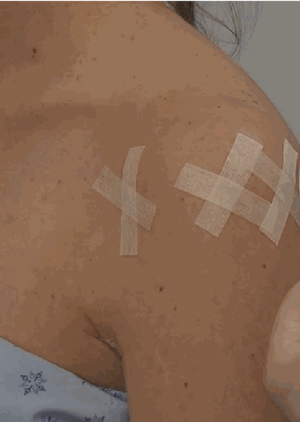
Example of steri-strips.
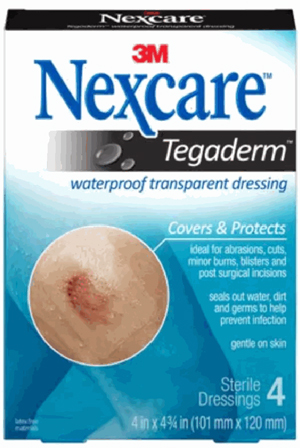
Example of a waterproof bandage.
Do I need to wear a sling or immobilizer?
- After a SLAP repair, you will wear your sling for four weeks, and the sling should be worn at all times, including while sleeping.
- You will have a small foam cushion (abduction pillow) between your arm and your body. This should be left in place while wearing the sling and is removed at two weeks.
- After a biceps tenodesis without a labral repair, the sling is used mainly for comfort, generally for about two weeks (Table 8). You do not need the abduction pillow.
- While in the sling, the elbow should be bent at a right angle and the hand should be level with your elbow or slightly higher. The elbow should be resting slightly in front of your body.
- You may remove the sling for exercises as prescribed by the surgeon or therapist, for icing, for dressing, and for showering.
What are my precautions regarding movements and positions after surgery?
- Do not actively move your arm away from your body for the first several weeks following surgery. In addition, do not lift any object, even if you are just bending your elbow.
- Do not do resisted biceps activities, such as lifting or carrying with the elbow bent, or forcefully turning your palm up, for at least four weeks after a SLAP repair and six weeks after a biceps tenodesis.
- Avoid raising the arm overhead and avoid rotating the arm outward (as in a throwing position) beyond the limits given to you by your therapist. These positions place the greatest stress on the repaired labrum.
- When lying on your back, we recommend you put a towel roll under your elbow to support the arm.
- Many patients find that lying on a 30-degree incline wedge in bed is more comfortable than lying flat. Some patients find sleeping in a recliner more comfortable during the first few weeks after surgery.
- Initially after surgery you should not reach behind your back with your operated arm.
- Absolutely no lifting.
- You may begin pendulum hangs, but we do not want you to actively move your arm.
- You should start shoulder blade pinches and rolls.
- Passive range of motion for the elbow if you had any surgical work done to your biceps tendon (tenodesis or tenotomy). Active range of motion elbow bending, with no weight, if you did not have any surgical work done to your biceps.
- You can begin active exercises for your wrist and hand, including ball squeezes.
May I use my involved arm for dressing, bathing, driving and other daily activities?
- You may use your wrist, hand and elbow for light daily activities. This includes eating, shaving and dressing, as long as you do not move your operated arm away from your body, do not lift with the arm, and it does not increase your pain.
- Do not use your arm to push up or off the bed or a chair for at least six weeks after your surgery.
- When using your keyboard and mouse, do not move your arm away from your body.
- When showering, you may wash under the involved armpit by bending forward to let the involved arm hang freely and reaching under with the opposite arm.
- Do not drive while wearing the sling or while taking narcotic pain medication./li>
When should I begin formal physical therapy, and how often do I need to go?
- Physical therapy usually begins within the first one to two weeks following a SLAP repair or a biceps tenodesis, and I will refer you when the timing is appropriate. This includes physical therapy sessions at the clinic in addition to a home exercise program for range of motion and postural exercises. You will eventually be prescribed strengthening exercises.
- Bring your rehabilitation protocol to your first therapy visit: Table 7 after a SLAP repair, or Table 8 after a biceps tenodesis without a labral repair.
- Frequency of treatment will be determined by your specific needs together with the physician and physical therapist recommendations.
When may I return to sports and recreational activities?
- Return to sports and recreational activities is specific to the particular activity, but generally no sooner than four to six months after a SLAP repair and about three to four months after a biceps tenodesis. Throwing and overhead athletes typically require longer.
- Always seek permission from your surgeon and therapist prior to starting any sports-related activity.
Can I smoke following surgery?
You should not smoke after surgery, as it interferes with healing. Smoking has been identified as a risk factor for failure of SLAP repair and the need for revision surgery.43
Exercises you can perform at home at this time
- Pendulum circles. Shift your body weight in circles to allow your operated arm to swing in circles freely. Your operated arm should be fully relaxed.
- Shrugs. Raise your shoulders upward towards your ears. Shrug both shoulders at the same time.
- Scapular retractions. Draw your shoulder blades back and down.
- Wrist and hand active range of motion, and elbow range of motion as described above (passive only if you had a biceps tenodesis or tenotomy).
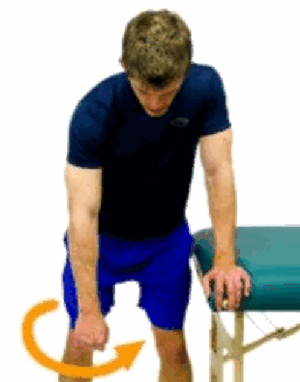
Pendulum circles.
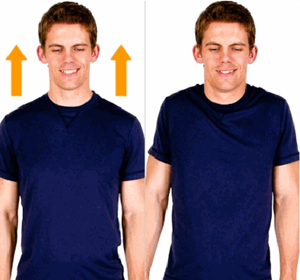
Shrugs.
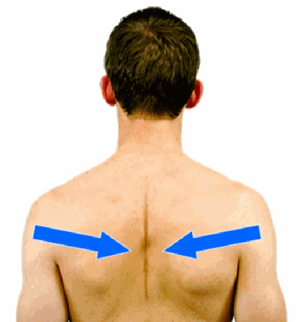
Scapular retractions.
Questions or concerns
If at any time you have questions or concerns, you can either contact your surgeon's medical assistant via email or call the main office at 855-624-3306. You can also use the electronic medical record's online portal to send questions.
References
- Mercouris P, Mercouris M. Superior labrum anterior to posterior lesions: part 1 - imaging and anatomy with arthroscopic classification. SA J Radiol. 2023;27(1):2706. doi:10.4102/sajr.v27i1.2706
- Cohen SB, Matthews JR. SLAP tears. Video J Sports Med. 2021;1(3):26350254211000754. doi:10.1177/26350254211000754
- Ishikawa H, Henninger HB, Kawakami J, et al. A stabilizing role of the glenoid labrum: the suction cup effect. J Shoulder Elbow Surg. 2023;32(5):1095-1104. doi:10.1016/j.jse.2022.12.002
- Eichinger JK, Li X, Cohen SB, et al. American Shoulder and Elbow Surgeons SLAP/Biceps Anchor Study Group evidence review: pathoanatomy and diagnosis in clinically significant labral injuries. J Shoulder Elbow Surg. 2023;32(5):e179-e190. doi:10.1016/j.jse.2022.12.015
- Familiari F, Huri G, Simonetta R, McFarland EG. SLAP lesions: current controversies. EFORT Open Rev. 2019;4(1):25-32. doi:10.1302/2058-5241.4.180033
- Schatz M, Brolin TJ. Superior labral anterior to posterior tears: repair, tenodesis, or both? Orthop Clin North Am. 2025;56(4):359-368. doi:10.1016/j.ocl.2025.05.005
- Christensen GV, Smith KM, Kawakami J, Chalmers PN. Surgical management of superior labral tears in athletes: focus on biceps tenodesis. Open Access J Sports Med. 2021;12:61-71. doi:10.2147/OAJSM.S266226
- Lu Y, Li Y, Zhang H, Li X, Li F, Jiang C. The correlation between variation of labral attachment and lesions of the long head of the biceps tendon in patients with rotator cuff tears. Orthop Surg. 2023;15(8):1967-1974. doi:10.1111/os.13534
- Yu J, Yin Y, Chen W, Mi J. Long head of the biceps tendon plays a role in stress absorption and humeral head restriction during the late cocking and deceleration phases of overhead throwing: a finite element study. J Shoulder Elbow Surg. 2025;34(3):699-709. doi:10.1016/j.jse.2024.07.002
- Stepanyan H, Hui AT, Hung VT, et al. Biceps tenodesis/tenotomy disrupts biomechanical glenohumeral stability in the setting of superior labrum anteroposterior tear and repair. Arthroscopy. 2025;41(11):4440-4451. doi:10.1016/j.arthro.2025.05.022
- Verma NN, Hoenecke H, MacDonald P, et al. Principles of the superior labrum and biceps complex: an expert consensus from the NEER Circle. J Shoulder Elbow Surg. 2025;34(6):1543-1557. doi:10.1016/j.jse.2024.09.040
- Boesmueller S, Blumer R, Gesslbauer B, Hirtler L, Fialka C, Mittermayr R. Molecular pattern and density of axons in the long head of the biceps tendon and the superior labrum. J Clin Med. 2019;8(12):2129. doi:10.3390/jcm8122129
- Cavalcante MLC, Fernandes EG, Pinheiro Júnior JA, Jamacaru FVF, Coelho JVV, Leite JAD. Analysis of nerve endings in the superior labrum-biceps complex by fluorescence immunohistochemistry and confocal laser microscopy. Rev Bras Ortop (Sao Paulo). 2022;57(5):863-867. doi:10.1055/s-0040-1722579
- Mercouris P, Mercouris M. Superior labrum anterior to posterior lesions: part 2 - classification with arthroscopic correlation. SA J Radiol. 2023;27(1):2707. doi:10.4102/sajr.v27i1.2707
- Althoff AD, Brunette C, Brockmeier S. Postoperative rehabilitation after superior labrum anterior posterior repair. Phys Med Rehabil Clin N Am. 2023;34(2):377-392. doi:10.1016/j.pmr.2022.12.005
- Holub O, Schanda JE, Boesmueller S, et al. Glenohumeral pathologies following primary anterior traumatic shoulder dislocation-comparison of magnetic resonance arthrography and arthroscopy. J Clin Med. 2023;12(21):6707. doi:10.3390/jcm12216707
- Ro K, Kim MS, Kim JD, Rhee YG. Arthroscopic findings and clinical outcomes in patients 40 years of age and older with recurrent shoulder dislocation. Arthroscopy. 2019;35(2):314-322. doi:10.1016/j.arthro.2018.08.041
- Lim S, Kim SK, Kim YS. Comparison between SLAP repair and biceps tenodesis with concomitant rotator cuff repair in patients older than 45 years: minimum 2-year clinical and imaging outcomes. Clin Orthop Surg. 2020;12(3):364-370. doi:10.4055/cios19157
- Oklaz EB, Ahmadov A, Aral F, Erdem MC, Ayas IH, Kanatli U. Inferior labrum tears can accompany SLAP lesions and inferior labrum repair with SLAP lesion treatment results in satisfactory clinical outcomes at a minimum 2-year follow-up. Arch Orthop Trauma Surg. 2025;145(1):328. doi:10.1007/s00402-025-05940-7
- Mohr D, Nammour MA, Marcaccio SE, Arner JW, Bradley JP. Location of shoulder glenoid labral tears: A study of 1763 consecutive patients. Am J Sports Med. 2024;52(8):2063-2070. doi:10.1177/03635465241253835
- Mansour J, Nassar JE, Estephan M, Boulos K, Daher M. Acromioclavicular joint dislocation and concomitant labral lesions: a systematic review. Clin Shoulder Elb. 2024;27(2):247-253. doi:10.5397/cise.2023.00640
- Dean RS, Onsen L, Lima J, Hutchinson MR. Physical examination maneuvers for SLAP lesions: A systematic review and meta-analysis of individual and combinations of maneuvers. Am J Sports Med. 2023;51(11):3042-3052. doi:10.1177/03635465221100977
- Grimberg J, Dahan E. The throwing shoulder. Orthop Traumatol Surg Res. 2026;112:104448. doi:10.1016/j.otsr.2025.104448
- Pike JM, Singh SK, Kibler WB, Eichinger JK. Superior labrum anterior posterior clinical exam techniques. Video J Sports Med. 2022;2(3):26350254221083317. doi:10.1177/26350254221083317
- Buijze GA, Mariaux S, van Spanning SH, et al. The O'Brien test demonstrates a higher diagnostic value in identifying posteroinferior labral tears than superior labral anterior to posterior (SLAP) tears. JSES Int. 2023;7(1):67-71. doi:10.1016/j.jseint.2022.10.006
- Nosratpour M, Zarei H, Zaker Moshfegh M, et al. Diagnostic accuracy of magnetic resonance imaging for detecting superior labrum anterior to posterior lesions: a systematic review and meta-analysis. JSES Int. 2025;9(6):1972-1987. doi:10.1016/j.jseint.2025.05.023
- Thiagarajan A, Nagaraj R, Marathe K. Correlation between clinical diagnosis, MRI, and arthroscopy in diagnosing shoulder pathology. Cureus. 2021;13(12):e20654. doi:10.7759/cureus.20654
- de Almeida TBC, de Souza Carvalho JO, de Castro LT, Nishimura EM, de Almeida LBC, Pascarelli L. Analysis of the incidence of false-negative results for SLAP lesions on magnetic resonance imaging. Radiol Bras. 2025;58:e20240065. doi:10.1590/0100-3984.2024.0065-en
- Villers MD, Yoder RG, Morscher MA, et al. Sensitivity and specificity of MRa and MRI compared to diagnostic arthroscopy in pediatric and young adult shoulder stabilization surgery. Orthop J Sports Med. 2026;14(6):23259671261449710. doi:10.1177/23259671261449710
- Özer M, Kaptan AY, Ataoglu MB, et al. The Buford complex: prevalence and relationship with labral pathologies. J Shoulder Elbow Surg. 2021;30(6):1356-1361. doi:10.1016/j.jse.2020.08.037
- Kaptan AY, Özer M, Alim E, et al. The middle glenohumeral ligament: a classification based on arthroscopic evaluation. J Shoulder Elbow Surg. 2022;31(3):e85-e91. doi:10.1016/j.jse.2021.07.026
- Benes M, Kachlik D, Kopp L, Kunc V. Prevalence of the anterosuperior capsulolabral anatomical variations and their association with pathologies of the glenoid labrum: a systematic review and meta-analysis. Arch Orthop Trauma Surg. 2023;143(10):6295-6303. doi:10.1007/s00402-023-04932-9
- Moran J, Joo PY, Vasavada K, et al. The Buford complex: a review of embryology, imaging, technical considerations, and clinical significance. JSES Rev Rep Tech. 2025;5(2):243-250. doi:10.1016/j.xrrt.2024.12.005
- Alali A, Li D, Monteiro S, Choudur H. Feasibility of high resolution ultrasound for SLAP tears of the shoulder compared to MR arthrogram. BJR Open. 2019;1(1):20190007. doi:10.1259/bjro.20190007
- Ni M, Gao L, Chen W, et al. Preliminary exploration of deep learning-assisted recognition of superior labrum anterior and posterior lesions in shoulder MR arthrography. Int Orthop. 2024;48(1):183-191. doi:10.1007/s00264-023-05987-4
- Wang H, Xue Q, Shi L, Wang F, Gao G, Wang L. Diagnosis of SLAP lesions on shoulder MRI using a 2.5D deep learning and ensemble learning framework. Front Surg. 2026;13:1730726. doi:10.3389/fsurg.2026.1730726
- Hahn AK, Holmberg K, Hammarstedt JE, et al. Intraobserver and interobserver reliability of the Snyder and expanded SLAP classification system: A video study. Orthop J Sports Med. 2023;11(11):23259671231204851. doi:10.1177/23259671231204851
- Bowering AW, Bolt BN, Donaghy CG, Smith NC. Inter-rater and intrarater reliability of superior labrum anterior to posterior lesion classification using magnetic resonance arthrography. JSES Int. 2024;8(5):1051-1054. doi:10.1016/j.jseint.2024.06.009
- Steinmetz RG, Guth JJ, Matava MJ, Brophy RH, Smith MV. Return to play following nonsurgical management of superior labrum anterior-posterior tears: a systematic review. J Shoulder Elbow Surg. 2022;31(6):1323-1333. doi:10.1016/j.jse.2021.12.022
- Schoon N, Shirinskiy I, Macken AA, et al. Factors influencing surgeons' decision-making in the treatment of SLAP lesions: A case-vignette study. J ISAKOS. 2026;17:101087. doi:10.1016/j.jisako.2026.101087
- Brox JI, Skare Ø, Mowinckel P, Brox JS, Reikerås O, Schrøder CP. Sick leave and return to work after surgery for type II SLAP lesions of the shoulder: a secondary analysis of a randomised sham-controlled study. BMJ Open. 2020;10(4):e035259. doi:10.1136/bmjopen-2019-035259
- Fariyike B, Neal WHE, Bi AS, et al. In-office needle arthroscopy for superior labral tear debridement. Arthrosc Tech. 2024;13(5):102956. doi:10.1016/j.eats.2024.102956
- de Sa D, Arakgi ME, Lian J, Crum RJ, Lin A, Lesniak BP. Labral repair versus biceps tenodesis for primary surgical management of type II superior labrum anterior to posterior tears: A systematic review. Arthroscopy. 2019;35(6):1927-1938. doi:10.1016/j.arthro.2018.12.015
- Green CK, Scanaliato JP, Fares AB, Czajkowski H, Dunn JC, Parnes N. Midterm outcomes after arthroscopic repair of type VIII SLAP lesions in active duty military patients younger than 35 years. Orthop J Sports Med. 2022;10(5):23259671221095908. doi:10.1177/23259671221095908
- Bethell MA, Hurley ET, Rowe D, et al. Type V superior labrum anterior to posterior repair: a systematic review. J Shoulder Elbow Surg. 2024;33(8):e443-e450. doi:10.1016/j.jse.2024.01.054
- McCahon JAS, Albana MF, Szukics PF, McMillan S. All arthroscopic suprapectoral biceps tenodesis. Video J Sports Med. 2022;2(6):26350254221136153. doi:10.1177/26350254221136153
- Pratte T, Smith T, Arevalo A, Wazen J, Rubenstein D. Arthroscopic suprapectoral biceps tenodesis: the best of both worlds. Arthrosc Tech. 2022;11(9):e1619-e1623. doi:10.1016/j.eats.2022.05.008
- Forsythe B, Berlinberg EJ, Diaz CC, et al. No difference in clinical outcomes for arthroscopic suprapectoral versus open subpectoral biceps tenodesis at midterm follow-up: a randomized prospective analysis. Am J Sports Med. 2022;50(6):1486-1494. doi:10.1177/03635465221084731
- Lee TY, Touhey DC, Perugini JM, et al. Outcomes following arthroscopic suprapectoral and open subpectoral biceps tenodesis at short- to midterm follow-up: A systematic review. Am J Sports Med. 2026;54(9):2341-2353. doi:10.1177/03635465261426560
- Belk JW, Kraeutler MJ, Houck DA, Chrisman AN, Scillia AJ, McCarty EC. Biceps tenodesis versus tenotomy: a systematic review and meta-analysis of level I randomized controlled trials. J Shoulder Elbow Surg. 2021;30(5):951-960. doi:10.1016/j.jse.2020.11.012
- Meng B, Zhang Z, Li W, Wang Q, Cao J. Arthroscopic management of spinoglenoid notch cysts: with and without labral lesions. BMC Musculoskelet Disord. 2025;26(1):796. doi:10.1186/s12891-025-09074-0
- Nair NMS, Banarji BH, Jain K, Reddy A. Glenoid paralabral cysts causing shoulder pain and isolated infraspinatus weakness: early arthroscopic decompression and labral repair leads to complete recovery: A case series. J Orthop Case Rep. 2025;15(3):189-193. doi:10.13107/jocr.2025.v15.i03.5384
- Gomez DN, Zulkahini NF, Ahmad AR, Solayar GN. Isolated infraspinatous atrophy from a spinoglenoid cyst: A case report. Malays Orthop J. 2022;16(1):142-145. doi:10.5704/MOJ.2203.024
- Yoon JY, Park WS, Jeong HJ, Jeon YD, Kim JU, Oh JH. Spontaneous resolution of spinoglenoid ganglion cyst: a case series. J Shoulder Elbow Surg. 2024;33(8):1828-1835. doi:10.1016/j.jse.2023.11.025
- Kim DH, Sohn HJ, Kim JH, Cho CH. Clinical outcomes following arthroscopic decompression and repair versus repair alone in patients with a concomitant spinoglenoid cyst and SLAP lesion: A systematic review. Diagnostics (Basel). 2023;13(14):2364. doi:10.3390/diagnostics13142364
- Cho CH, Kim JH, Kim DH. Similar outcomes after cyst decompression with biceps tenodesis versus cyst decompression with repair of superior labrum anterior to posterior lesions in patients with paralabral cysts. Clin Orthop Surg. 2026;18(4):687-694. doi:10.4055/cios25351
- Cvetanovich GL, Gowd AK, Agarwalla A, Forsythe B, Romeo AA, Verma NN. Trends in the management of isolated SLAP tears in the United States. Orthop J Sports Med. 2019;7(3):2325967119833997. doi:10.1177/2325967119833997
- Truong NM, Cevallos N, Lansdown DA, Ma CB, Feeley BT, Zhang AL. Biceps tenodesis demonstrates lower reoperation rates compared to SLAP repair for treatment of SLAP tears in a large cross-sectional population. Arthroscopy. 2021;38(6):1802-1809.e2. doi:10.1016/j.arthro.2021.11.049
- Kreulen RT, Agarwal AR, Nayar SK, et al. SLAP repair and bicep tenodesis: a comparison of utilization and revision rates for SLAP tears. JSES Int. 2023;7(2):290-295. doi:10.1016/j.jseint.2022.11.001
- Hong IS, Meade JD, Young BL, et al. Trends in repair vs. biceps tenodesis for superior labrum from anterior to posterior (SLAP) tear: an epidemiological study. Cureus. 2022;14(7):e27096. doi:10.7759/cureus.27096
- Jo YH, Oh HK, Jeong SY, Lee BG. National trends in the repair of isolated superior labral tear from anterior to posterior in Korea. J Korean Med Sci. 2020;35(34):e285. doi:10.3346/jkms.2020.35.e285
- Yıldız V, Özgezmez FT. Arthroscopic evaluation of failed primary type II SLAP lesion repair in patients with high physical activity over 40 years of age and the outcomes of tenotomy. Jt Dis Relat Surg. 2021;32(3):649-657. doi:10.52312/jdrs.2021.243
- Recker AJ, Waters TL, Bullock G, et al. Biceps tenodesis has greater expected value than repair for isolated type II SLAP tears: A meta-analysis and expected-value decision analysis. Arthroscopy. 2022;38(10):2887-2896.e4. doi:10.1016/j.arthro.2022.05.005
- Hurley ET, Baker R, Danilkowicz RM, et al. Similar outcomes between biceps tenodesis and SLAP repair for SLAP tears in younger patients - A meta-analysis. J ISAKOS. 2024;9(1):79-83. doi:10.1016/j.jisako.2023.09.007
- Lacheta L, Horan MP, Nolte PC, Goldenberg BT, Dekker TJ, Millett PJ. SLAP repair versus subpectoral biceps tenodesis for isolated SLAP type 2 lesions in overhead athletes younger than 35 years: comparison of minimum 2-year outcomes. Orthop J Sports Med. 2022;10(6):23259671221105239. doi:10.1177/23259671221105239
- Hurley ET, Colasanti CA, Lorentz NA, et al. Open subpectoral biceps tenodesis may be an alternative to arthroscopic repair for SLAP tears in patients under 30. Arthroscopy. 2021;38(2):307-312. doi:10.1016/j.arthro.2021.07.028
- Hurley ET, Lorentz NA, Colasanti CA, Campbell KA, Alaia MJ, Jazrawi LM. Open subpectoral biceps tenodesis versus arthroscopic repair for SLAP tears in patients under 30 [abstract 150]. In: SECEC-ESSE 2021 Congress Abstracts. J Shoulder Elbow Surg. 2022:e166.
- Parnes N, Dunn JC, Czajkowski H, DeFranco MJ, Green CK, Scanaliato JP. Biceps tenodesis as an attractive alternative to superior labral anterior-posterior (SLAP) repair for type II SLAP lesions in active-duty military patients younger than 35 years. Am J Sports Med. 2021;49(14):3945-3951. doi:10.1177/03635465211049373
- Scanaliato JP, Sandler AB, Darwish B, Gilat R, Tyler JR, Parnes N. Failure rates of SLAP repair compared with subpectoral biceps tenodesis for young military patients with type 2 SLAP at 10-year follow-up. Am J Sports Med. 2026;54(6):1314-1323. doi:10.1177/03635465261429405
- Klemt C, Toderita D, Reilly P, Bull AMJ. Biceps tenodesis cannot be used as primary treatment option in baseball pitchers with intact rotator cuff muscles. Clin Biomech (Bristol). 2022;100:105819. doi:10.1016/j.clinbiomech.2022.105819
- Hurley ET, Mojica ES, Markus DH, et al. High rate of satisfaction and return to play at 5-year follow-up after arthroscopic superior-labrum anterior-posterior repairs. Arthroscopy. 2022;38(7):2178-2182. doi:10.1016/j.arthro.2022.01.039
- Parnes N, Magnuson JA, Hettrich CM, et al. Establishing clinical significance for patients undergoing arthroscopic repair of type II SLAP lesions. Orthop J Sports Med. 2024;12(11):23259671241286520. doi:10.1177/23259671241286520
- Provencher MT, McCormick F, Peebles LA, et al. Outcomes of primary biceps subpectoral tenodesis in an active population: A prospective evaluation of 101 patients. Arthroscopy. 2019;35(12):3205-3210. doi:10.1016/j.arthro.2019.06.035
- Linscheid LJ, DeShazo SJ, Pescatore SM, Somerson JS. Superior labrum anterior to posterior (SLAP) repair is associated with increased rate of subsequent rotator cuff diagnoses and revision surgery: a propensity-matched comparison. J Shoulder Elbow Surg. 2024;33(8):1821-1827. doi:10.1016/j.jse.2023.12.015
- Khazai RS, Lee CS, Boyajian HH, Shi LL, Athiviraham A. Rates of subsequent shoulder surgery within three years for patients undergoing SLAP repair versus biceps tenodesis. Arthrosc Sports Med Rehabil. 2020;2(2):e129-e135. doi:10.1016/j.asmr.2020.01.003
- Abdul-Rassoul H, Defazio M, Curry EJ, Galvin JW, Li X. Return to sport after the surgical treatment of superior labrum anterior to posterior tears: A systematic review. Orthop J Sports Med. 2019;7(5):2325967119841892. doi:10.1177/2325967119841892
- Rowe DG, Hurley ET, Bethell MA, et al. Return to play after arthroscopic superior labral repair: A systematic review. Am J Sports Med. 2025;53(3):727-733. doi:10.1177/03635465241246122
- Frantz TL, Shacklett AG, Martin AS, et al. Biceps tenodesis for superior labrum anterior-posterior tear in the overhead athlete: A systematic review. Am J Sports Med. 2021;49(2):522-528. doi:10.1177/0363546520921177
- Lorentz NA, Hurley ET, Colasanti CA, et al. Return to play after biceps tenodesis for isolated SLAP tears in overhead athletes. Am J Sports Med. 2022;50(5):1369-1374. doi:10.1177/03635465211041698
- Waterman BR, Newgren J, Richardson C, Romeo AA. High rate of return to sporting activity among overhead athletes with subpectoral biceps tenodesis for type II SLAP tear. Arthroscopy. 2022;39(1):11-16. doi:10.1016/j.arthro.2022.07.017
- Ulrich MN, Cvetanovich GL, Meeks BD, Jones GL. Return to sport and patient-reported outcomes after subpectoral biceps tenodesis for SLAP tear in collegiate gymnasts. Orthop J Sports Med. 2023;11(5):23259671231159354. doi:10.1177/23259671231159354
- Paul RW, Perez A, Johns WL, et al. Return-to-sport and performance outcomes after isolated superior labrum anterior to posterior (SLAP) repair in professional baseball players. J Shoulder Elbow Surg. 2025;34(10):2360-2367. doi:10.1016/j.jse.2025.01.025
- Howard R, Johnson E, Rao S, et al. Return to play in adolescent baseball players after SLAP repair. Orthop J Sports Med. 2025;13(8):23259671251360398. doi:10.1177/23259671251360398
- Colasanti CA, Akpinar B, Rynecki N, et al. Poor psychological readiness inhibits return to play following operative management of superior-labrum anterior-posterior tears. Arthrosc Sports Med Rehabil. 2023;5(2):e359-e366. doi:10.1016/j.asmr.2023.01.001
- Cabarcas BC, Beletsky A, Liu J, et al. Short-term clinical and return-to-work outcomes after arthroscopic suprapectoral onlay biceps tenodesis with a single suture anchor. Arthrosc Sports Med Rehabil. 2021;3(4):e1065-e1076. doi:10.1016/j.asmr.2021.03.012
- Agarwalla A, Gowd AK, Liu JN, et al. Predictive factors and the duration to pre-injury work status following biceps tenodesis. Arthroscopy. 2019;35(4):1026-1033. doi:10.1016/j.arthro.2018.10.144
- Waterman BR, Arroyo W, Heida K, Burks R, Pallis M. SLAP repairs with combined procedures have lower failure rate than isolated repairs in a military population: surgical outcomes with minimum 2-year follow-up. Orthop J Sports Med. 2015;3(8):2325967115599154. doi:10.1177/2325967115599154
- Nishioka T, Lalvani S, Thamrongskulsiri N, et al. Return to work outcomes after common sports-related orthopaedic procedures: a systematic review stratified by occupational intensity and workers’ compensation status. Am J Sports Med. Published online June 30, 2026. doi:10.1177/03635465261455044
- Chalmers PN, Monson B, Frank RM, et al. Combined SLAP repair and biceps tenodesis for superior labral anterior-posterior tears. Knee Surg Sports Traumatol Arthrosc. 2016;24(12):3870-3876. doi:10.1007/s00167-015-3774-6
- Green CK, Scanaliato JP, Sandler AB, et al. Midterm outcomes following combined biceps tenodesis and anterior labral repair in active duty military patients younger than 35 years. Am J Sports Med. 2023;51(7):1844-1851. doi:10.1177/03635465231169238
- Song Y, Wu Z, Wang M, Liu S, Cong R, Tao K. Arthroscopic modified double-row biceps tenodesis versus labral repair for the treatment of isolated type II SLAP lesions in non-overhead athletes. Orthop Surg. 2022;14(7):1340-1349. doi:10.1111/os.13229
- Provencher MT, McCormick F, Dewing C, McIntire S, Solomon D. A prospective analysis of 179 type 2 superior labrum anterior and posterior repairs: outcomes and factors associated with success and failure. Am J Sports Med. 2013;41(4):880-886. doi:10.1177/0363546513477363
- Verma NN, Garretson R, Romeo AA. Outcome of arthroscopic repair of type II SLAP lesions in worker’s compensation patients. HSS J. 2007;3(1):58-62. doi:10.1007/s11420-006-9023-2
- Kreines A, Pontes M, Ford E, et al. Outcomes of arthroscopic biceps tenodesis for the treatment of failed type II SLAP repair: a minimum 2-year follow-up. Arch Bone Jt Surg. 2020;8(2):154-161. doi:10.22038/abjs.2019.40449.2087
- Parmar T, Daher M, Kermanshahi N, et al. Comparing shoulder surgery outcomes in workers’ compensation versus nonworkers’ compensation patients: a meta-analysis. J Shoulder Elbow Surg. 2025;34(12):e1234-e1248. doi:10.1016/j.jse.2025.03.004
- Park S, Glousman RE. Outcomes of revision arthroscopic type II superior labral anterior posterior repairs. Am J Sports Med. 2011;39(6):1290-1294. doi:10.1177/0363546511398648
- Nadeem IM, Vancolen S, Horner NS, Leroux T, Alolabi B, Khan M. Management of failed SLAP repair: a systematic review. HSS J. 2020;16(3):261-271. doi:10.1007/s11420-019-09700-3
- Murphy GT, Lam P, Murrell GAC. Stiffness: friend or foe? A cohort study evaluating the effect of early postoperative stiffness on the outcomes of patients who underwent superior labral repair. J Shoulder Elbow Surg. 2021;30(5):1018-1024. doi:10.1016/j.jse.2020.07.046
- Lorentz NA, Hurley ET, Markus DH, et al. Primary biceps tenodesis is superior to revision following failed SLAP repair. Arthrosc Sports Med Rehabil. 2022;4(6):e1979-e1983. doi:10.1016/j.asmr.2022.08.006
- Sclafani S, Oury J, Schoofs E, Mullen M, Willard J, Godshaw B. Iatrogenic suprascapular neuropathy secondary to drilling for superior labrum anterior-posterior repair: a case report. J ISAKOS. 2026;17:101083. doi:10.1016/j.jisako.2026.101083
- Lee JH, Kang JS, Park I, Shin SJ. Serial changes in perianchor cysts following arthroscopic labral repair using all-suture anchors. Clin Orthop Surg. 2021;13(2):229-236. doi:10.4055/cios20024
- Tornberg HN, Czachor MK, Gutowski CT, et al. Non-opioid pain management in younger patients undergoing arthroscopic glenoid labrum surgery: a randomized controlled trial. J Shoulder Elbow Surg. Published online June 4, 2026. doi:10.1016/j.jse.2026.05.037
- Hermanns CA, Coda RG, Cheema S, et al. Variability in rehabilitation protocols after superior labrum anterior posterior surgical repair. Kans J Med. 2021;14(3):243-248. doi:10.17161/kjm.vol14.15286
- Pederson Z, Giambini H. In vivo long head of the biceps tendon stiffness varies with forearm position during active contraction: implications for personalized rehabilitation after SLAP lesions. J Pers Med. 2026;16(4):194. doi:10.3390/jpm16040194
- Glover MA, Restrepo A, Recker AJ, et al. An expedited sling immobilization protocol after isolated biceps tenodesis results in clinical and patient-reported postoperative outcomes equivalent to a standard rehabilitation protocol. Arthrosc Sports Med Rehabil. 2024;6(1):100840. doi:10.1016/j.asmr.2023.100840
- Assaf F, Saad R, Saadeh J, et al. Long head of biceps tenodesis: fixation constructs and tenodesis level—a narrative review. Orthop Res Rev. 2026;18:636307. doi:10.2147/ORR.S636307
- Galetta MD, Cheng TTW, Keller RE, Harris E, Oh LS. Rehabilitation variability after biceps tenodesis. Orthop J Harvard Med Sch. 2021;22:6-12. Accessed November 2, 2026. https\://www.orthojournalhms.org/22/2021article6_12.html
- Freehill MT, Murray IR, Calvo E, Lädermann A, Srikumaran U. Shoulder surgery postoperative immobilization: an international survey of shoulder surgeons. Biology (Basel). 2023;12(2):291. doi:10.3390/biology12020291
- Raji Y, Bugarinovic G, Helenius KN, Freehill MT. Subpectoral biceps tenodesis using an all-suture anchor. Video J Sports Med. 2024;4(5):26350254241249766. doi:10.1177/26350254241249766
- Liechti DJ, Mitchell JJ, Menge TJ, Hackett TR. Immediate physical therapy without postoperative restrictions following open subpectoral biceps tenodesis: low failure rates and improved outcomes at a minimum 2-year follow-up. J Shoulder Elbow Surg. 2018;27(10):1891-1897. doi:10.1016/j.jse.2018.02.061
- Kilicoglu O, Koyuncu O, Demirhan M, et al. Time-dependent changes in failure loads of 3 biceps tenodesis techniques: in vivo study in a sheep model. Am J Sports Med. 2005;33(10):1536-1544. doi:10.1177/0363546505274716
- Abdel-Mordy Kandeel A. Intra-articular soft arthroscopic Latarjet technique as a Bankart-plus procedure for type V superior labrum anterior-posterior lesion: lower rate of instability recurrence and better functional outcomes of a prospective cohort study. J Shoulder Elbow Surg. 2023;32(9):1838-1849. doi:10.1016/j.jse.2023.01.043
- Abourisha E, Sakr M, Srinivasan A, Singh HP. Surgical management of SLAP lesions: which technique has better surgical outcomes? J Orthop. 2024;50:29-35. doi:10.1016/j.jor.2023.11.053
- Abraham VT. Editorial commentary: back to work after shoulder biceps tenodesis!! Arthroscopy. 2019;35(4):1034-1035. doi:10.1016/j.arthro.2018.11.069
- Alharbi SK, Alahaidib A, Alsowaigh M, Alharbi J, Alahaideb A. Double bucket handle tear of the superior labrum in a young patient presented with shoulder instability treated with arthroscopic debridement: A case report. Int J Surg Case Rep. 2021;82:105939. doi:10.1016/j.ijscr.2021.105939
- Allegra PR, Greif DN, Desai SS, et al. The fifty most-cited articles regarding SLAP lesions. Arthrosc Sports Med Rehabil. 2021;3(1):e135-e147. doi:10.1016/j.asmr.2020.08.018
- Amorim E, Maganinho P, Rodrigues-Gomes D, Rodrigues-Gomes S, Sevivas N. Type IX superior labrum anterior and posterior lesion in a professional football player: A rare pattern of shoulder instability in a non-throwing athlete. Cureus. 2023;15(2):e34753. doi:10.7759/cureus.34753
- Awasthi P, Dwivedi A, Choudhary SS. Role of magnetic resonance arthrography (MRA) in the diagnosis of shoulder injuries. Adv Biomed Res. 2025;14:55. doi:10.4103/abr.abr_347_23
- Banerjee M, Balke M, Bouillon B, Titze F, Shafizadeh S. Soft tissue injury of the shoulder after single non-dislocating trauma: prevalence and spectrum of intraoperative findings during shoulder arthroscopy and treatment results. Arch Orthop Trauma Surg. 2015;135(1):103-109. doi:10.1007/s00402-014-2114-5
- Batra AK, Brusalis CM, Jawanda H, Jackson G, Verma NN. Lateral decubitus positioning for shoulder arthroscopy. Video J Sports Med. 2023;3(3):26350254231169488. doi:10.1177/26350254231169488
- Berth A, Pozniak A, Stendel L, Fischbach F, Lohmann C, Pech M. Magnetic resonance-guided direct shoulder arthrography for the detection of superior labrum anterior-posterior lesions using an open 1.0-T MRI scanner. Pol J Radiol. 2019;84:e251-e257. doi:10.5114/pjr.2019.86894
- Bi AS, Jazrawi LM, Cohen SB, Erickson BJ. The physical examination of the throwing shoulder. Clin Sports Med. 2025;44(2):113-128. doi:10.1016/j.csm.2024.05.002
- Billaud A, Garcia-Maya B, Pesquer L, Pillot S. Outcomes after open Latarjet in patients with or without SLAP lesions. Orthop J Sports Med. 2023;11(7):23259671231185199. doi:10.1177/23259671231185199
- Bonaspetti G, Dib G, Azzola F. Body builder's shoulder: posterior labrum periosteal sleeve avulsion (POLPSA) and glenoid posterior rim stress fracture due to intense bench pressing. Case Rep Orthop. 2022;2022:4533576. doi:10.1155/2022/4533576
- Challoumas D, Loh C, Ibekwe N, Leung TCC, Millar N. Surgical management of internal impingement in overhead athletes: a systematic review. Clin Shoulder Elb. 2026;29(1):115-133. doi:10.5397/cise.2025.01123
- Chiang CH, Ho W, Lin CH, Chih WH, Su WR, Hong CK. Modified arthroscopic intra-articular transtendinous looped biceps tenodesis leads to satisfactory functional outcomes and less frequent Popeye deformity compared to biceps tenotomy. J Orthop Surg Res. 2023;18(1):603. doi:10.1186/s13018-023-04078-9
- de Cabo G, Álvarez-Benito N, Ramos-Murillo P, Poyato-Núñez F, González-Martín D, Leyes M. Modified dynamic anterior stabilization and labroplasty for anterior shoulder instability with concomitant SLAP lesion. Arthrosc Tech. 2023;12(12):e2153-e2159. doi:10.1016/j.eats.2023.07.041
- Della Rotonda G, Guastafierro A, Viglione S, et al. Long-term results of arthroscopic repair of type II SLAP lesions in sports: assessment of return to pre-injury playing level and critical risk factors for complication. Eur J Orthop Surg Traumatol. 2024;34(1):433-440. doi:10.1007/s00590-023-03677-w
- Dougherty MC, Kulenkamp JE, Boyajian H, Koh JL, Lee MJ, Shi LL. Not all SLAPs are created equal: A comparison of patients with planned and incidental SLAP repair procedures. Adv Orthop. 2019;2019:9013935. doi:10.1155/2019/9013935
- Douglas L, Whitaker J, Nyland J, et al. Return to play and performance perceptions of baseball players after isolated SLAP tear repair. Orthop J Sports Med. 2019;7(3):2325967119829486. doi:10.1177/2325967119829486
- Drawbert H, Schnackenberg K, Obermeier M, Tompkins M. Biceps tenodesis for the treatment of type II superior labral anterior posterior (SLAP) tears in overhead athletes under the age of 35: A case series. Cureus. 2024;16(10):e71141. doi:10.7759/cureus.71141
- Eren TK, Kaptan AY, Bircan R, Tosun MF, Kanatlı U. Lesion prevalence and patient outcome comparison between primary and recurrent anterior shoulder instability. J Shoulder Elbow Surg. 2023;32(9):1812-1818. doi:10.1016/j.jse.2023.05.029
- Erickson BJ, Camp CL, D'Angelo J, et al. Musculoskeletal findings of the Major League Baseball combine: A description of the "normal" prospective professional baseball player. Am J Sports Med. 2025;53(8):1826-1831. doi:10.1177/03635465251339773
- Erickson BJ, Shishani Y, Jones S, Romeo AA, Gobezie R. Clinical and radiographic outcomes after Latarjet using suture-button fixation. JSES Int. 2021;5(2):175-180. doi:10.1016/j.jseint.2020.10.009
- Eubank BHF, Lackey SW, Slomp M, Werle JR, Kuntze C, Sheps DM. Consensus for a primary care clinical decision-making tool for assessing, diagnosing, and managing shoulder pain in Alberta, Canada. BMC Fam Pract. 2021;22(1):201. doi:10.1186/s12875-021-01544-3
- Farshad-Amacker NA, Jain Palrecha S, Farshad M. The primer for sports medicine professionals on imaging: the shoulder. Sports Health. 2013;5(1):50-77. doi:10.1177/1941738112468265
- Forsythe B, Gamsarian V, Patel HH, et al. Arthroscopic biceps tenodesis with interference screw fixation: A technique video. Video J Sports Med. 2024;4(4):26350254241230972. doi:10.1177/26350254241230972
- Galvin JW, Yu H, Slevin J, et al. High incidence of anterior shoulder pain in young athletes undergoing arthroscopic posterior labral repair for posterior shoulder instability. Arthrosc Sports Med Rehabil. 2021;3(5):e1441-e1447. doi:10.1016/j.asmr.2021.06.012
- Garrett CH, Dugas JR. Superior labrum anterior to posterior lesions and capsular injuries in the throwing athlete. Clin Sports Med. 2025;44(2):215-231. doi:10.1016/j.csm.2024.06.002
- Green CK, Scanaliato JP, Sandler AB, Patrick CM, Dunn JC, Parnes N. Concomitant biceps tenodesis does not portend inferior outcomes after anterior glenohumeral stabilization. Am J Sports Med. 2023;51(14):3851-3857. doi:10.1177/03635465231209731
- Green CK, Scanaliato JP, Sandler AB, et al. Outcomes following combined posterior labral and SLAP repair in military patients younger than 35 years. Am J Sports Med. 2023;51(10):2635-2641. doi:10.1177/03635465231181702
- Greiner JJ, Setliff JC, Dworkin JD, Lin A. Arthroscopic repair of a "floating" posterior inferior glenohumeral ligament. Video J Sports Med. 2022;2(4):26350254221097980. doi:10.1177/26350254221097980
- Güçlü D, Uludağ V, Arıcan M, Ünlü EN, Oğul H. Relationship between SLAP lesions and shoulder joint capsule thickness: an MR arthrographic study. Medicina (Kaunas). 2024;60(8):1332. doi:10.3390/medicina60081332
- Hameed MH, Huda M, Qureshi M, Momtaz A, Hameed SF. The role of ultrasound in postoperative assessment of biceps tenodesis: A case report. Cureus. 2025;17(6):e86099. doi:10.7759/cureus.86099
- Hansen CH, Asturias AM, Pennock AT, Edmonds EW. Adolescent posterior-superior glenoid labral pathology: does involvement of the biceps anchor make a difference? Am J Sports Med. 2020;48(4):959-965. doi:10.1177/0363546519900162
- Hohmann E, Glatt V, Tetsworth K, Paschos N. Biomechanical studies for glenoid based labral repairs with suture anchors do not use consistent testing methods: A critical systematic review. Arthroscopy. 2021;38(3):1003-1018. doi:10.1016/j.arthro.2021.08.035
- Holschen M, Bockmann B, Schulte TL, Wit KA, Steinbeck J. Single-portal proximal biceps tenodesis using an all-suture anchor. Arthrosc Tech. 2022;11(4):e497-e503. doi:10.1016/j.eats.2021.11.023
- Hunter CDR, Wilde B, Da Silva A, et al. Occupational and functional outcomes of arthroscopic labral repair are not affected by concomitant extra-articular shoulder procedures. JSES Int. 2025;9(5):1457-1461. doi:10.1016/j.jseint.2025.05.017
- Kandeel AA. Soft arthroscopic Latarjet procedure: technical note on biceps tendon as a modified sling for restoration of glenohumeral stability. Arthrosc Tech. 2021;10(6):e1531-e1537. doi:10.1016/j.eats.2021.02.021
- Kandeel AA. Type V superior labral anterior-posterior (SLAP) lesion in recurrent anterior glenohumeral instability. J Shoulder Elbow Surg. 2020;29(1):95-103. doi:10.1016/j.jse.2019.05.038
- Karademir G, Tunalı O, Özdemir YE, Diril SK, Topkarcı YB, Atalar AC. Arthroscopic biceps tenodesis: inlay or onlay technique? Ulus Travma Acil Cerrahi Derg. 2026;32(4):473-479. doi:10.14744/tjtes.2025.08783
- Keppens M, Thielman L, Biebauw S, Muermans S. Intraneural ganglion of the suprascapular nerve with asymmetric branch recovery and dual-site compression: A case report. J Orthop Case Rep. 2026;16(1):231-235. doi:10.13107/jocr.2026.v16.i01.6664
- Kim S, Deivert KT, Goodeill T, et al. Concomitant biceps tenodesis does not compromise arthroscopic rotator cuff repair outcomes. Arthroscopy. 2024;40(10):2556-2562.e1. doi:10.1016/j.arthro.2024.02.035
- Kim SH, Lee UY, Yoon Y, et al. Ultrasound-guided biceps-tracking access to the superior labral-biceps anchor complex: A technical report with cadaveric demonstration of gross injectate localization. Cureus. 2026;18(6):e111637. doi:10.7759/cureus.111637
- Kim YT, Lee KJ, Kim SH. Biceps rerouting regardless of a biceps-labral lesion during rotator cuff repair results in lower retear rates and comparable clinical outcomes to subpectoral biceps tenodesis. Arthroscopy. 2024;40(8):2162-2170. doi:10.1016/j.arthro.2024.01.024
- Kleinsmith RM, Huyke-Hernandez FA, Reams M, et al. Grit is not associated with opioid consumption patterns in patients that undergo arthroscopic rotator cuff repair. JSES Int. 2025;10(1):101375. doi:10.1016/j.jseint.2025.08.012
- Lalehzarian SP, Agarwalla A, Liu JN. Management of proximal biceps tendon pathology. World J Orthop. 2022;13(1):36-57. doi:10.5312/wjo.v13.i1.36
- Lannes X, Traverso A, Coron C, Blakeney WG, Bauer S. Partial rotator cuff repair with biceps rerouting and double tenodesis: an efficient and cost-effective biological superior capsular reconstruction. Video J Sports Med. 2021;1(4):26350254211016469. doi:10.1177/26350254211016469
- Lee JHT, Haen PSW, Lam PH, Tan M, Murrell GAC. Comparing clinical outcomes between rotator cuff repairs, SLAP repairs, and combined repairs. JSES Int. 2020;4(4):875-881. doi:10.1016/j.jseint.2020.07.014
- Li LT, Chuck C, Bokshan SL, DeFroda SF, Owens BD. Cost comparison of open and arthroscopic treatment options for SLAP tears. Arthrosc Sports Med Rehabil. 2021;3(2):e315-e322. doi:10.1016/j.asmr.2020.09.020
- Lin HY, Chiang ER, Wu SL, Wu CL, Chiou HJ, Wu HT. The correlation between hip alpha angle and acetabular labral tear location and size: A cross-sectional study. J Chin Med Assoc. 2024;87(1):119-125. doi:10.1097/JCMA.0000000000001022
- Lin L, Xiao J, Cui G, Yan H. Arthroscopic fixation of avulsion fractures of the lesser tuberosity of the humerus: clinical outcomes with a mean 3.5-year follow-up. Orthop J Sports Med. 2021;9(9):23259671211029886. doi:10.1177/23259671211029886
- Long J, Liles J, Anakwenze O, Klifto C. Iatrogenic injury to the suprascapular nerve following reverse shoulder arthroplasty: A case report. J Shoulder Elb Arthroplast. 2022;6:24715492221103518. doi:10.1177/24715492221103518
- Maier J, Oak SR, Soloff L, Schickendantz M, Frangiamore S. Management of common upper extremity injuries in throwing athletes: a critical review of current outcomes. JSES Rev Rep Tech. 2021;1(4):295-300. doi:10.1016/j.xrrt.2021.08.007
- Maldonado JA, Puentes DA, Quintero ID, González-Estrada OA, Villegas DF. Image-based numerical analysis for isolated type II SLAP lesions in shoulder abduction and external rotation. Diagnostics (Basel). 2023;13(10):1819. doi:10.3390/diagnostics13101819
- Manzi JE, Kunze KN, Meza B, et al. Decreased trunk rotation at foot contact in professional baseball pitchers with prior conservatively managed SLAP tears: A propensity score-matched analysis. Arthroscopy. 2021;38(4):1066-1074. doi:10.1016/j.arthro.2021.11.009
- Misir A. A comprehensive review of dynamic anterior stabilization of the long head of the biceps. Clin Shoulder Elb. 2026;29(1):141-160. doi:10.5397/cise.2025.00752
- Mlv SK, Mittal R, Chauhan N. Arthroscopic findings after manipulation under anesthesia in idiopathic capsulitis of the shoulder: A prospective study. World J Clin Cases. 2023;11(34):8147-8152. doi:10.12998/wjcc.v11.i34.8147
- Nair AV, Jangale A, Kumar MP, et al. Trans-cuff portals heal by 6 weeks: an ultrasonography-based study. JSES Int. 2021;5(6):1072-1076. doi:10.1016/j.jseint.2021.07.012
- Nammour M, Arner JW, Eads R, Bradley JP. Arthroscopic repair of a 360° labrum and full-thickness rotator cuff tear after shoulder dislocation. Video J Sports Med. 2023;3(3):26350254231156221. doi:10.1177/26350254231156221
- Nammour M, Arner JW, Murray R, Bradley JP. Arthroscopic repair of a type VIII superior labrum anterior posterior tear. Video J Sports Med. 2023;3(2):26350254231156220. doi:10.1177/26350254231156220
- Naoi D, Kawabata M, Watanabe D, Miyatake K. Lower subscapular nerve hydrodissection and subscapularis re-education for residual anterior shoulder pain after superior labrum anterior to posterior debridement: A case report. Cureus. 2025;17(10):e93985. doi:10.7759/cureus.93985
- Nazzal EM, Herman ZJ, Engler ID, et al. Comparison of revision and redislocation rates after first-time anterior shoulder instability between subluxators and dislocators: A midterm outcome study. Orthop J Sports Med. 2024;12(12):23259671241298014. doi:10.1177/23259671241298014
- Oklaz EB, Ahmadov A, Aral F, Tosun MF, Ayas İH, Kanatli U. Repair of isolated subscapularis tears with concurrent biceps tenodesis using a single anchor results in satisfactory clinical outcomes: minimum 2-year follow-up. Arthroscopy. 2024;41(5):1268-1276. doi:10.1016/j.arthro.2024.07.026
- Omodani T. Ultrasound-guided hydrodissection of the thoracodorsal nerve and axillary nerve in a gymnast with shoulder pain associated with superior labral anterior-posterior lesions: A case report. Cureus. 2024;16(5):e60157. doi:10.7759/cureus.60157
- Osborne AM, Contreras ES, Sarac N, et al. The utility of shoulder arthroscopy at the time of open Latarjet. Orthop J Sports Med. 2026;14(2):23259671261415839. doi:10.1177/23259671261415839
- Patriota GSQA, Belangero PS, Figueiredo EA, Lara PHS, Roncetti R, Ejnisman B. SLAP IV in overhead sports practice. Acta Ortop Bras. 2019;27(3):169-172. doi:10.1590/1413-785220192703191478
- Patzkowski JC, Dickens JF, Cameron KL, Bokshan SL, Garcia EJ, Owens BD. Pathoanatomy of shoulder instability in collegiate female athletes. Am J Sports Med. 2019;47(8):1909-1914. doi:10.1177/0363546519850810
- Peng Y, Zhang F, Fu Y, et al. The superior glenoid humeral ligament's role in superior labrum anterior-posterior lesions and subtype classification based on arthroscopic views: A multicenter, retrospective study. Orthop J Sports Med. 2025;13(1):23259671241303464. doi:10.1177/23259671241303464
- Phornphutkul C, Tahwang S, Settakorn J. Effects of type II SLAP lesion repair techniques on the vascular supply of the long head of the biceps tendon: a cadaveric injection study. J Shoulder Elbow Surg. 2021;30(4):772-778. doi:10.1016/j.jse.2020.07.014
- Porta M, Capelli S, Caroli A, et al. Shoulder magnetic resonance arthrography with the internal and external rotation positions of the humeral head in the evaluation of SLAP lesions. Diagnostics (Basel). 2022;12(9):2230. doi:10.3390/diagnostics12092230
- Ranieri R, Illuminati M, Conti M, Delle Rose G, Minelli M, Castagna A. Surgical treatment of shoulder pathologies in professional gymnasts: findings, treatment, and clinical outcomes. J Clin Med. 2024;13(8):2183. doi:10.3390/jcm13082183
- Ren YM, Duan YH, Sun YB, Yang T, Hou WY, Tian MQ. Is arthroscopic repair superior to biceps tenotomy and tenodesis for type II SLAP lesions? A meta-analysis of RCTs and observational studies. J Orthop Surg Res. 2019;14(1):48. doi:10.1186/s13018-019-1096-y
- Rothermich MA, Ryan MK, Fleisig GS, et al. Clinical outcomes and return to play in softball players following SLAP repair or biceps tenodesis. J Shoulder Elbow Surg. 2023;32(5):924-930. doi:10.1016/j.jse.2022.10.025
- Rupp MC, Rutledge JC, Dey Hazra RO, Dey Hazra ME, Haskel J, Millett PJ. Arthroscopic labral repair and pancapsular shift with knotless all-suture anchors in the setting of multidirectional instability of the shoulder. Arthrosc Tech. 2023;12(8):e1289-e1295. doi:10.1016/j.eats.2023.03.020
- Sabesan V, Chatha K, Guo E, Whaley J, Amador M, Lavin A. Performance metrics and economics of superior labrum anterior-posterior tear repairs in Major League Baseball pitchers. JSES Int. 2022;6(4):569-572. doi:10.1016/j.jseint.2022.03.003
- Saccomanno MF, Cerciello S, Adriani M, et al. Knotless PEEK and double-loaded biodegradable suture anchors ensure comparable clinical outcomes in the arthroscopic treatment of traumatic anterior shoulder instability: a prospective randomized study. Knee Surg Sports Traumatol Arthrosc. 2022;30(11):3835-3841. doi:10.1007/s00167-022-06969-6
- Sarıkaya B, Bozkurt C, Gül O, Bekin Sarıkaya PZ, Sipahioğlu S, Altay MA. Comparison of the clinical results of isolated Bankart and SLAP 5 lesions after arthroscopic repair. Jt Dis Relat Surg. 2020;31(2):223-229. doi:10.5606/ehc.2020.74750
- Schiefer M, Cossich V, Siqueira G, Monteiro MT, Nery LF, Motta G. Intra-articular arthroscopic biceps tenodesis with interference screw: clinical and isokinetic evaluation. JSES Int. 2020;4(3):632-637. doi:10.1016/j.jseint.2020.03.012
- Schrøder CP, Skare Ø, Reikerås O, Mowinckel P, Brox JI. Sham surgery versus labral repair or biceps tenodesis for type II SLAP lesions of the shoulder: a three-armed randomised clinical trial. Br J Sports Med. 2017;51(24):1759-1766. doi:10.1136/bjsports-2016-097098
- Sheean AJ, Arner JW, Bradley JP. Posterior glenohumeral instability: diagnosis and management. Arthroscopy. 2020;36(10):2580-2582. doi:10.1016/j.arthro.2020.05.018
- Shih CY, Lin PR, Huang HC, Hsieh CP. Clinical outcome of an all arthroscopic 'whole layer' rotator cuff repair technique with simultaneous biceps tenodesis. Orthop Surg. 2024;16(11):2751-2760. doi:10.1111/os.14198
- Shin MH, Baek S, Kim TM, Kim H, Oh KS, Chung SW. Biceps tenodesis versus superior labral anterior and posterior (SLAP) lesion repair for the treatment of SLAP lesion in overhead athletes: A systematic review and meta-analysis. Am J Sports Med. 2022;50(14):3987-3997. doi:10.1177/03635465211039822
- Skedros JG, Marshall JH, Cronin JT. Presumed glenoid SLAP tear in an adolescent football player belied the presence of a coracoid growth plate fracture: A diagnostic conundrum. Case Rep Orthop. 2022;2022:1756611. doi:10.1155/2022/1756611
- Somasundaram AK, Mohan A, Appukuttan A. Late presentation of acromioclavicular joint dislocation with double fracture of coracoid process managed by arthroscopic stabilization technique: A case report. J Orthop Case Rep. 2025;15(7):78-83. doi:10.13107/jocr.2025.v15.i07.5774
- St Jeor JD, Mason TW, Glover MA, Trasolini NA, Waterman BR. Arthroscopic suture bridge fixation for acute bony Bankart with anterior glenohumeral instability: a case report and narrative review. Ann Jt. 2024;9:16. doi:10.21037/aoj-23-46
- Subramanian KN, Channabasappa Eswarappa D, Senthilnathan GP, Subramanian M, Sellappan R. Arthroscopic nomenclature of capsulolabral appearances in anterior shoulder dislocation. J Orthop. 2021;25:120-123. doi:10.1016/j.jor.2021.03.016
- Sun L, Huang Y, Hao S, et al. Subtypes analysis and treatment strategies of type V SLAP lesions. JSES Rev Rep Tech. 2025;5(4):805-811. doi:10.1016/j.xrrt.2025.04.008
- Takeuchi Y, Sugaya H, Takahashi N, et al. Superior labral injuries in elite gymnasts: symptoms, pathology, and outcomes after surgical repair. Orthop J Sports Med. 2020;8(7):2325967120935001. doi:10.1177/2325967120935001
- Tewari K, Sun B, Sridharan M, et al. A review of research on throwing biomechanics, upper extremity injuries, and treatment of throwing injuries in professional baseball and football. Orthop J Sports Med. 2026;14(1):23259671251407244. doi:10.1177/23259671251407244
- Thayaparan A, Yu J, Horner NS, Leroux T, Alolabi B, Khan M. Return to sport after arthroscopic superior labral anterior-posterior repair: a systematic review. Sports Health. 2019;11(6):520-527. doi:10.1177/1941738119873892
- Toma L, Cossu E, Demetri L, Zhang D, Blazar PE, Earp BE. Arthroscopic versus open approaches in shoulder surgery: trends in Medicare service utilization and reimbursement. JSES Rev Rep Tech. 2026;6(4):100802. doi:10.1016/j.xrrt.2026.100802
- Turan S, Deveci A, Kulaçoğlu S, Bingöl O, Özdemir G. There is a correlation between histopathological findings of joint capsule and synovium, and postoperative clinical outcomes and treatment in patients with isolated type II superior labrum anterior posterior lesions. Jt Dis Relat Surg. 2020;31(3):440-448. doi:10.5606/ehc.2020.77899
- Vargas-Figueroa RA, Rodríguez-Reyes D, Luigi Martinez HE, Vazquez-Lloret AS, Señeriz Ortiz R. Current non-operative management of shoulder pathologies: A narrative review. Cureus. 2025;17(12):e98500. doi:10.7759/cureus.98500
- Verweij LPE, van Spanning SH, Grillo A, et al. Age, participation in competitive sports, bony lesions, ALPSA lesions, > 1 preoperative dislocations, surgical delay and ISIS score > 3 are risk factors for recurrence following arthroscopic Bankart repair: a systematic review and meta-analysis of 4584 shoulders. Knee Surg Sports Traumatol Arthrosc. 2021;29(12):4004-4014. doi:10.1007/s00167-021-06704-7
- Wang H, Xue Q, Shi L, Wang F, Gao G, Wang L. Correction: diagnosis of SLAP lesions on shoulder MRI using a 2.5D deep learning and ensemble learning framework. Front Surg. 2026;13:1866165. doi:10.3389/fsurg.2026.1866165
- Wang KC, Theismann JJ, Cole E, Zhang AL. Arthroscopic intra-articular biceps tenodesis with all-suture anchor. Video J Sports Med. 2025;5(1):26350254241301446. doi:10.1177/26350254241301446
- Weick JW, Workman WB, Bush CJ, McCollum KA, Sugaya H, Freehill MT. Reported technical aspects of type II SLAP lesion repairs in athletes. Arthrosc Sports Med Rehabil. 2021;3(2):e289-e296. doi:10.1016/j.asmr.2020.09.003
- Williams BA, Michel R, LaChaud GY, Weltsch D, Farmer KW, King J. Outcome measure utilization demonstrates no relation to journal rank or level of evidence for superior labral tears of the shoulder. Cureus. 2020;12(3):e7189. doi:10.7759/cureus.7189
- Witten A, Clausen MB, Thorborg K, Hölmich P, Barfod KW. The challenge of diagnosing patients presenting with signs and symptoms of subacromial pain syndrome: A descriptive study of 741 patients seen in a secondary care setting. Orthop J Sports Med. 2025;13(4):23259671251332942. doi:10.1177/23259671251332942
- Wuennemann F, Kintzelé L, Zeifang F, et al. Diagnostic performance of 3D-multi-echo-data-image-combination (MEDIC) for evaluating SLAP lesions of the shoulder. BMC Musculoskelet Disord. 2019;20(1):598. doi:10.1186/s12891-019-2986-1
- Yahsi Y, Ogul H, Ertogrul R, Sakci Z, Sulek Y, Kantarci M. MR arthrographic analysis of labral and tendinous lesions in patients with shoulder avulsion injury. BMC Musculoskelet Disord. 2025;26(1):933. doi:10.1186/s12891-025-09217-3
- Yu J, Mi J, Zhao G, et al. Initial evidence suggests biceps tenodesis location may not significantly affect glenohumeral joint stress or humeral head translation during late cocking and deceleration in throwing: a finite element analysis. J Shoulder Elbow Surg. 2026;35(2):591-601. doi:10.1016/j.jse.2025.05.034
- Zhang M, Liu J, Jia Y, et al. Risk factors for recurrence after Bankart repair: a systematic review and meta-analysis. J Orthop Surg Res. 2022;17(1):113. doi:10.1186/s13018-022-03011-w
- Zhou M, Zhou C, Cui D, et al. The high resistance loop (H-loop) technique used for all-inside arthroscopic knotless suprapectoral biceps tenodesis: A case series. Front Surg. 2022;9:917853. doi:10.3389/fsurg.2022.917853
- Çetinkaya M, Kaptan AY, Ulucaköy C, et al. Is it the subcoracoid impingement or the subacromial impingement that tears the subscapularis tendon? A comparison of the MRI findings of the operated and healthy shoulders of the patients. Turk J Med Sci. 2023;53(1):273-281. doi:10.55730/1300-0144.5582


