
What are the bones of the shoulder and how do they interact?
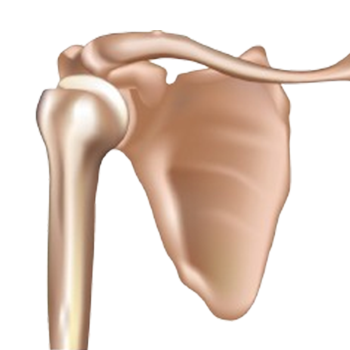
Figure 1. Bone of the shoulder including the clavicle (collar bone), scapula (shoulder blade), and humerus. (Licensed from Adobe stock)
The shoulder is made up of three bones: the scapula (shoulder blade), the humerus (upper arm bone), and the clavicle (collar bone). The main joint of the shoulder, the glenohumeral joint, is formed by the rounded head of the humerus and the glenoid, which is the shallow socket at the outer edge of the scapula.1 This relationship is often compared to a golf ball sitting on a tee, since the humeral head is much larger than the glenoid and only about 25% to 30% of the humeral head is ever in contact with the glenoid at one time.2
This design allows the shoulder to move through a greater range of motion than any other joint in the body, but this mobility comes at the expense of inherent bony stability.1,2 The clavicle connects the scapula (and the rest of the arm) to the sternum (breastbone) through the acromioclavicular and sternoclavicular joints, and the scapula glides along the back of the rib cage at the scapulothoracic articulation. All of these bones and joints work together to position the arm in space, but because the glenohumeral joint itself is so shallow, the shoulder relies heavily on the surrounding soft tissues for stability, which is discussed further below.1
What are the other structures that provide stability to the shoulder to prevent dislocations?
Because the bony socket of the shoulder is so shallow, stability depends on a combination of "static" and "dynamic" restraints working together.1,2 The static stabilizers include the glenoid labrum (a ring of tissue that deepens the socket), the glenohumeral ligaments and joint capsule, and the negative pressure within the joint that helps create a suction-like seal between the humeral head and glenoid.1,2 The glenohumeral ligaments (superior, middle, and inferior) tighten at different arm positions to resist the humeral head sliding out of the socket; the inferior glenohumeral ligament is considered the single most important ligament resisting anterior dislocation, particularly when the arm is raised and rotated outward.1,2
The dynamic stabilizers are the muscles and tendons that actively compress and center the humeral head in the glenoid as the arm moves. These include the four rotator cuff muscles, the biceps tendon, the deltoid, the pectoralis major and latissimus dorsi, and the muscles that stabilize the shoulder blade itself.1,2 This active muscular compression is especially important in the middle of the shoulder's range of motion, when the ligaments are naturally more relaxed.1 An injury, whether from a single traumatic event or from repetitive overuse, can damage one or several of these static or dynamic stabilizers and lead to recurrent instability.3
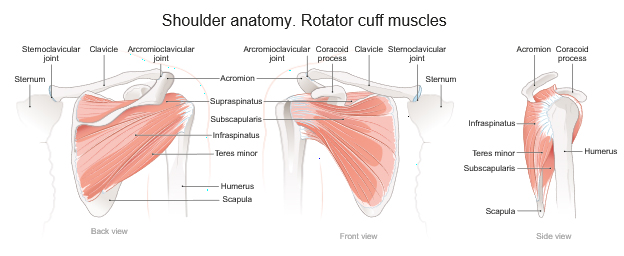
Figure 2. Rotator cuff muscles of the shoulder. (Licensed from Adobe stock)
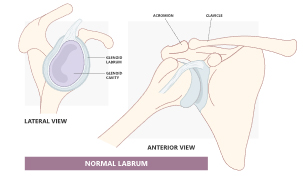
Figure 3. Shoulder labrum and biceps tendon. (Licensed from Adobe stock)
What is the shoulder labrum?
The glenoid labrum is a ring of dense fibrous connective tissue that surrounds the rim of the glenoid socket. Although it is often called "fibrocartilage," anatomic studies have shown it more closely resembles tendon tissue.2,4 The labrum increases the depth of the glenoid socket by roughly one-third and increases the surface area of contact between the humeral head and the glenoid by approximately 50%, both of which help the humeral head stay centered during shoulder motion.1,2
The labrum also serves as the attachment site for the glenohumeral ligaments and the long head of the biceps tendon, and it contributes to a "suction cup" effect that creates negative pressure within the joint, further resisting displacement of the humeral head.1,2,4 When the labrum is torn away from the glenoid, as occurs with a traumatic dislocation, this stabilizing function is lost and the shoulder becomes prone to repeat episodes of instability.2
What are the most common causes of shoulder dislocations and how often do they occur?
The great majority of shoulder dislocations are caused by trauma, most classically a fall onto an outstretched, abducted, and externally rotated arm, which places maximal stress on the anterior structures of the shoulder.1,3 This same position is commonly reproduced in contact and overhead sports, such as during a tackle, a fall while skiing, or a blocked volleyball or basketball shot.3Anterior dislocations make up the large majority of all shoulder dislocations, accounting for roughly 85% to 98% of cases, with posterior and multidirectional instability being far less common.1,3
Shoulder dislocation is common: approximately 1% to 2% of the general population will experience one during their lifetime, and the glenohumeral joint is the most frequently dislocated major joint in the body.1,3 A recent 10-year review of United States emergency department visits estimated over 773,000 shoulder dislocations occurred nationally between 2012 and 2021, with an annual incidence of about 24 per 100,000 people; patients were significantly more often male (about 70%) than female, and the average age at injury was 37 years.5 Sports and recreational activities were the most commonly identified cause, involved in over 44% of cases.5 Young, active males involved in contact sports (such as football and rugby) are at particularly high risk, while a second, smaller peak in incidence occurs in older women, often related to a fall.3,5
What is a shoulder labrum tear?
When the shoulder dislocates, the labrum is often torn away from the glenoid along with the attached ligament tissue; this is called a Bankart lesion, first described by the British surgeon Bankart in 1923.1,2 A Bankart lesion is found in the large majority of patients (up to about 90%) with recurrent anterior shoulder instability, and because a torn labrum has very little capacity to heal back down on its own, surgical repair is often required to restore stability.1,2
There are several important variations of this injury. A Perthes lesion is essentially an early-stage, non-displaced Bankart lesion in which the labrum is torn but the periosteum (lining) of the bone underneath remains intact. An anterior labroligamentous periosteal sleeve avulsion (ALPSA) lesion occurs when this periosteum is stripped and the torn labrum scars down in an abnormal, medialized position, which can make it harder to recognize at the time of surgery.1,2 Less commonly, the ligament can tear away from its attachment on the humerus rather than the glenoid, called a HAGL (humeral avulsion of the glenohumeral ligament) lesion.1,2 A superficial labral tear with an associated cartilage injury, but without true instability, is referred to as a GLAD lesion.1
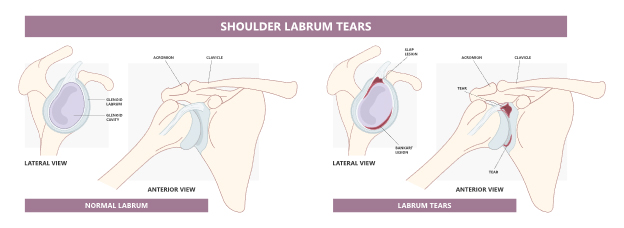
Figure 4. Normal shoulder labrum and examples of shoulder labral tears. (Licensed from Adobe stock)
What is bony Bankart fracture?
A bony Bankart lesion occurs when the labrum and capsule tear away from the glenoid along with an actual fragment of the glenoid bone itself, rather than just the soft tissue alone.2,6 These fractures are common: three-dimensional CT studies of patients with recurrent instability have found some type of glenoid bone injury in up to 90% of shoulders, with roughly half showing a discrete bone fragment and the remainder showing erosion or rounding-off of the glenoid rim from repeated dislocations.2,3
A bony Bankart lesion is important because it removes part of the bony socket that would otherwise help contain the humeral head, and larger fragments meaningfully increase the risk of continued instability.2,6 Surgeons measure the amount of glenoid bone loss, usually with a CT scan, because this measurement is one of the most important factors in deciding on the best treatment option, discussed further below.1,6
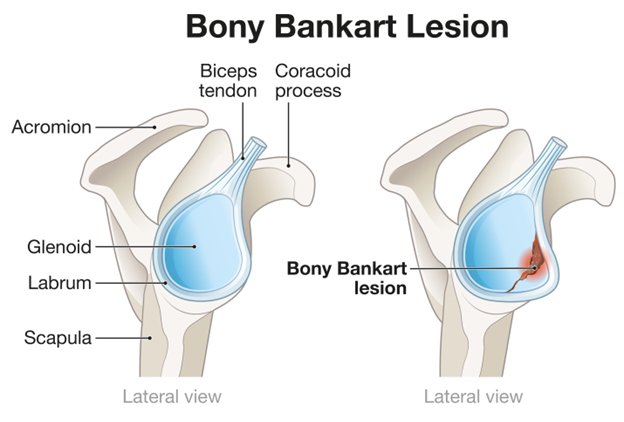
Figure 5. Example of a Bony Bankart glenoid fracture. (Licensed from Adobe stock)
What is a Hill-Sachs lesion?
A Hill-Sachs lesion is an impaction fracture on the back, outer portion of the humeral head, first described by radiologists Hill and Sachs in 1940.2 It occurs at the moment of dislocation, when the relatively soft bone of the humeral head is compressed against the harder, sharper rim of the glenoid.2,7 These lesions are extremely common and become more frequent with repeated dislocation, occurring in about 40% of patients with subluxation alone, 70% to 90% after a single dislocation, and nearly all patients with recurrent dislocations.2
Most Hill-Sachs lesions are small and of little clinical consequence. However, a Hill-Sachs lesion can become "engaging" if it is large or positioned in such a way that it catches on the anterior rim of the glenoid when the arm is raised and rotated outward, causing the shoulder to slip out of place again.2,8 Surgeons use the "glenoid track" concept to determine whether a given Hill-Sachs lesion is "on-track" (unlikely to engage the glenoid and cause further instability) or "off-track" (at higher risk for engaging and causing recurrent dislocation), which helps guide the choice of surgical treatment.2,7,8
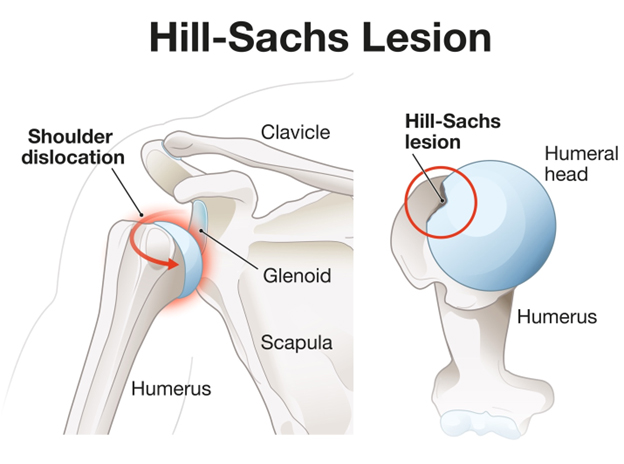
Figure 6. Anterior shoulder dislocation with resulting Hill-Sachs lesion demonstrated.
What are they symptoms of a shoulder dislocation?
An acute shoulder dislocation is typically very painful, with the arm often held slightly away from the body and the patient unable to actively move it. There is often a visible or palpable deformity, with a hollow area felt beneath the point of the shoulder (acromion) and the humeral head sometimes able to be felt out of position toward the front of the shoulder.3 Muscle spasm around the joint is common, and any attempt at motion is usually very painful.3
Because the nerves and blood vessels of the arm pass close to the shoulder joint, numbness, tingling, or weakness (most commonly affecting the axillary nerve, which can cause numbness over the point of the shoulder or weakness lifting the arm) can occur in up to a third of first-time dislocations and should always be checked.3 In patients with recurrent or chronic instability, the symptoms are often different and more subtle: a sense that the shoulder is "loose," clicking or catching, apprehension or fear that the shoulder is about to slip out of place in certain positions (classically when the arm is raised and rotated outward), and occasionally the ability to voluntarily or spontaneously sublux the joint.3
How is a shoulder dislocation diagnosed?
The diagnosis of an acute shoulder dislocation begins with a history of the injury (how it happened and the position of the arm) and a physical examination, including a careful check of the nerves, circulation, and rotator cuff of the arm both before and after any attempt at reduction (putting the joint back in place).
Once the joint is confirmed to be relocated, repeat radiographs are taken to verify the reduction, and further imaging, such as a CT scan or MRI, is often obtained afterward to evaluate for the specific injuries discussed elsewhere in this guide, including labral tears, bony Bankart fractures, and Hill-Sachs lesions, and to help guide any decisions about further treatment.1,3
How is a shoulder labrum tear diagnosed?
On physical examination, a labral tear is suspected using specific maneuvers such as the apprehension and relocation tests, in which the arm is positioned in abduction and external rotation to try to reproduce the patient's sense of instability, as well as load-and-shift or drawer testing to assess how much the humeral head translates on the glenoid.3 These tests are helpful but are not perfect on their own, so imaging plays a central role in confirming the diagnosis.3
MRI, particularly an MR arthrogram (in which contrast dye is injected into the joint before the scan), is the imaging study of choice for evaluating the labrum and associated ligaments, since it provides the best detail of these soft tissue structures. MR arthrography is reported to be approximately 92% sensitive and 98% specific for detecting labral and ligament tears, compared with about 77% sensitivity and 95% specificity for a standard, non-contrast MRI.1 On these images, a labral tear appears as a gap of fluid or contrast between the labrum and the underlying glenoid bone.1
How is a bony Bankart fracture diagnosed?
A bony Bankart fracture may be visible on the standard shoulder radiographs obtained after a dislocation, particularly a well-positioned axillary or Grashey (true anteroposterior) view, but smaller fragments and areas of bone erosion can be easy to miss on plain x-ray.3,6
CT scanning is considered the most accurate tool for evaluating and measuring glenoid bone loss and is typically obtained when a bony Bankart lesion is suspected or when surgery is being considered.1,6 Three-dimensional CT reconstructions, often with the humeral head digitally subtracted, allow the surgeon to view the glenoid "en face" (straight on) and measure the percentage of glenoid surface area that has been lost, most commonly using a "best-fit circle" method.1,3 This measurement is one of the most important pieces of information used to select the most appropriate treatment, since larger amounts of bone loss change the recommended surgical approach, as discussed later in this guide.1,6
How is a Hill-Sachs lesion diagnosed?
Like a bony Bankart lesion, a Hill-Sachs lesion can sometimes be seen on standard shoulder radiographs, particularly a dedicated Stryker notch or West Point axillary view, but CT and MRI provide a much more detailed and reliable assessment.2,7 On CT or MRI, a Hill-Sachs lesion appears as a focal divot or flattened area on the back, outer part of the humeral head.1
Beyond simply identifying the lesion, surgeons are most interested in determining its size and location in relationship to the glenoid, since this determines whether the lesion is "on-track" or "off-track" (at risk of engaging the glenoid rim and causing recurrent dislocation), using the glenoid track and related measurement methods described earlier.2,8 This assessment can be made using CT-based measurements before surgery, and it can also be checked dynamically at the time of arthroscopic surgery by moving the arm through the position of apprehension and directly visualizing whether the Hill-Sachs lesion engages the glenoid rim.2,8
What factors are important to deciding treatment of shoulder dislocations, labral tears, bony Bankart fractures, and Hill-Sachs lesions?
Treatment of anterior shoulder instability is never "one size fits all"; it is individualized based on a combination of patient and injury-specific factors.9,10 The single most important patient factor is age, since younger patients (particularly teenagers and patients in their twenties) have a substantially higher risk of recurrent instability than older patients.2,3 Other important patient factors include sex (recurrence is more common in men), participation in contact or overhead sports, the number of prior instability episodes, and whether the patient has generalized ligamentous laxity.2,3,9 Injury-specific factors include the amount of glenoid bone loss and the size and "track" status of any Hill-Sachs lesion, both of which are discussed above.2,9
To help combine these factors into a single, practical tool, Balg and Boileau described the Instability Severity Index Score (ISIS), which assigns points for age at surgery, level and type of sport, shoulder hyperlaxity, and the appearance of the Hill-Sachs lesion and glenoid on plain radiographs.2 Patients with a low score are generally excellent candidates for an arthroscopic ("keyhole") Bankart repair, while patients with a high score have a substantially higher failure rate with arthroscopic surgery alone and are often better served by an open, bone-block procedure (Latarjet), discussed later in this guide.2 Patient goals, occupation, and ability to comply with postoperative rehabilitation are also taken into account when finalizing a treatment plan.9
How are shoulder dislocations treated?
Treatment of a shoulder dislocation begins with reduction of the joint (returning the humeral head back into the glenoid socket) as soon as safely possible, which is most commonly accomplished in the emergency department or clinic using gentle traction techniques, sometimes with the assistance of sedation or a local anesthetic injection into the joint.3 Once the shoulder has been relocated and any associated fractures have been ruled out or addressed, treatment options range from nonoperative rehabilitation to a variety of surgical stabilization procedures, chosen based on the factors described in the preceding section.9,10 Each of the main treatment options is discussed in more detail below.
Non operative treatment
After the shoulder has been reduced, non-operative treatment consists of a brief period of sling immobilization for comfort, followed by a structured course of physical therapy focused on restoring motion and strengthening the rotator cuff and shoulder-blade (scapular) stabilizing muscles.2,3 Historically, some surgeons recommended longer periods of immobilization, or immobilization with the arm rotated outward rather than the standard sling position, in an attempt to hold the torn labrum against the glenoid while it heals; however, current evidence suggests that the duration and position of immobilization have relatively little effect on the chance of the shoulder dislocating again, and most surgeons now use only enough immobilization to allow the initial pain to settle.3,9
Non-operative treatment is generally most successful in patients who are older, have a lower risk of recurrence based on the factors above, and do not have significant bone loss.2,10 In younger, more active patients, particularly those involved in contact or collision sports, non-operative treatment is associated with a substantially higher risk of the shoulder dislocating again, and surgery is frequently considered even after a first-time dislocation to reduce this risk.2,9
Arthroscopic Bankart and bony Bankart repair
Arthroscopic Bankart repair is a minimally invasive surgery performed through small portals around the shoulder using a camera (arthroscope) and specialized instruments. The torn labrum and capsule are re-attached to the anterior rim of the glenoid using small suture anchors, restoring the normal "bumper" effect of the labrum and re-tensioning the ligaments that resist anterior dislocation.2,11 When a bony Bankart lesion is present, the bone fragment can often be repaired back to the glenoid at the same time, using sutures or small screws, in order to restore the glenoid's normal shape and surface area.6,11
This procedure is most successful in appropriately selected patients, generally those with a low Instability Severity Index Score and less than approximately 15% to 20% glenoid bone loss.2,11 After surgery, the arm is typically protected in a sling for several weeks while the repair heals, followed by a graduated physical therapy program, with return to full sport usually expected around 4 to 6 months.11
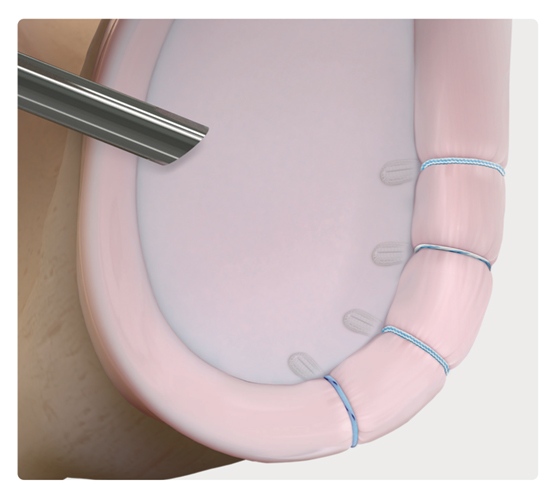
Figure 7. Example of a Bankart repair. The arthroscope (camera) is located to the left. Four anchors are seen in this repair. (credit: Arthrex.com)
Open Bankart repair
An open Bankart repair accomplishes the same goal as the arthroscopic version, reattaching the torn labrum and capsule to the glenoid, but is performed through a traditional open incision at the front of the shoulder (a deltopectoral approach), working through or around the subscapularis tendon to access and repair the anterior labrum and capsule directly with suture anchors.2,12
Although arthroscopic repair has become the more commonly used technique overall, the open approach remains a reliable, time-tested option and is often preferred in certain higher-risk situations, such as collision athletes, patients with more than about 10% to 20% glenoid bone loss who are not candidates for a bone-block procedure, patients with poor-quality capsulolabral tissue from multiple prior dislocations, or in a revision setting after a prior arthroscopic repair has failed.2,12 Several studies have found similar, and in some higher-risk groups even lower, rates of recurrent instability with open repair compared with arthroscopic repair, along with a good rate of return to contact sports.2,12
Remplissage
Remplissage (from the French word for "to fill") is a technique used to address a Hill-Sachs lesion that is considered "off-track" or engaging.7,13 It is performed arthroscopically at the same time as a Bankart repair and involves securing the posterior shoulder capsule and the adjacent infraspinatus tendon into the Hill-Sachs defect itself, filling in the bony divot and effectively moving it outside the joint (making it "extra-articular") so that it can no longer catch on the glenoid rim during arm rotation.7,11
Remplissage is generally reserved for off-track or engaging Hill-Sachs lesions in the setting of little to no significant glenoid bone loss, or as an add-on procedure to reduce the risk of recurrence in patients with subcritical glenoid bone loss or other risk factors for failure.7,13 Adding remplissage to a Bankart repair has been shown in multiple studies to meaningfully lower the rate of recurrent instability compared with Bankart repair alone in these higher-risk patients (for example, one study reported a decrease in recurrence from 47% to 13% in high-risk adolescents), with only a small and usually well-tolerated reduction in external rotation motion.7,13
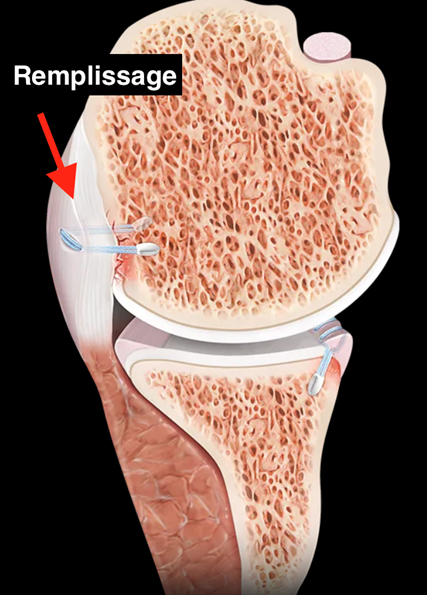
Figure 8. Example of a Remplissage performed with two knotless anchors. (credit: Arthrex.com)
Latarjet
The Latarjet procedure is an open, bone-block procedure in which the tip of the coracoid process (a small bony prominence at the front of the shoulder blade), along with its attached conjoint tendon, is transferred to the front of the glenoid and secured in place with screws.2,14 This procedure is thought to stabilize the shoulder through three combined effects: it rebuilds lost glenoid bone stock, it creates a dynamic "sling" or hammock effect from the conjoint tendon as it crosses in front of the subscapularis muscle, and the remaining soft tissue (the coracoacromial ligament stump) is used to reinforce the anterior capsule.14
The Latarjet procedure is generally reserved for patients with more significant glenoid bone loss (traditionally greater than about 20% to 25%, though even lower amounts are now recognized as important), patients who have failed a prior arthroscopic or open Bankart repair, and select higher-risk groups, such as some collision athletes or patients with epilepsy.2,13,14 Reported outcomes are generally very good, with postoperative redislocation rates in most series ranging from about 2.5% to 11%, high patient satisfaction (often 90% or better), and good subjective outcome scores, although outcomes tend to be somewhat better when the Latarjet is used as a first surgery rather than after a failed prior repair.14
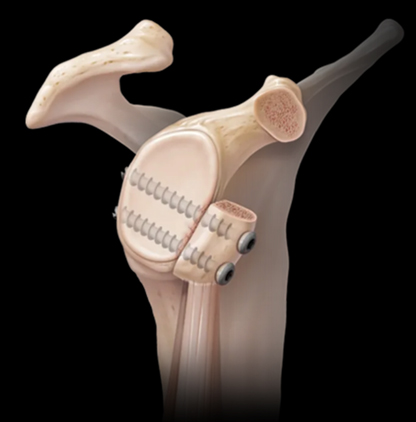
Figure 9. Visualization of a Latarjet procedure. (credit: Arthrex.com)
Timing of surgery after shoulder dislocation/labral tear
There is no single, universally agreed-upon timeline for surgery after a shoulder dislocation, and the decision is individualized based on the risk factors discussed earlier in this guide.9,10 For most first-time dislocations in lower-risk patients, an initial trial of non-operative rehabilitation is reasonable, with surgery reserved for those who go on to have recurrent instability. For younger, high-risk patients, particularly collision or overhead athletes, earlier surgical stabilization is increasingly favored, since it has been shown to reduce the risk of recurrent dislocation and the accumulation of further bone and cartilage damage compared with a prolonged trial of non-operative treatment.2,10
For in-season athletes who sustain an instability episode, a structured, supervised course of physical therapy and bracing may allow a return to play later that same season in carefully selected patients (those without significant bone loss and with adequate time remaining to rehabilitate), while surgery is typically planned for the off-season; however, patients who continue competing without surgery do have a meaningfully higher chance of a repeat instability event before the season ends.2,10 Chronic, unreduced dislocations become progressively more difficult to treat over time and may ultimately require additional or more complex procedures, which is one of several reasons that prompt evaluation after a shoulder dislocation is important regardless of the eventual treatment path chosen.3
What are the outcomes of surgery for shoulder instability/labral tears?
Overall, outcomes following surgical stabilization for anterior shoulder instability are good to excellent in appropriately selected patients. Arthroscopic Bankart repair is associated with low rates of recurrent instability in properly selected patients, though recurrence rates reported in the literature vary considerably (commonly in the range of roughly 5% to 20%) depending on the specific risk factors present and the length of follow-up, with longer-term studies generally reporting higher cumulative recurrence rates than shorter-term studies.11,12 Open Bankart repair has shown similar, and in some higher-risk populations lower, recurrence rates compared with arthroscopic repair, along with durable results and good rates of return to sport more than 10 years after surgery.12
The Latarjet procedure is associated with especially low redislocation rates (commonly reported between about 2.5% and 11%), high patient satisfaction, and good validated outcome scores, including in patients with significant glenoid bone loss who would otherwise be at high risk of failure with a soft-tissue-only repair.14 Adding a remplissage to a Bankart repair similarly improves outcomes in patients with an off-track Hill-Sachs lesion or subcritical bone loss compared with a Bankart repair alone.7,13 Across all of these procedures, functional outcome scores (measuring pain, function, and shoulder-specific quality of life) tend to improve substantially from before to after surgery, though a small proportion of patients may go on to develop shoulder arthritis over the long term, particularly after multiple dislocation events or revision surgery.3,14
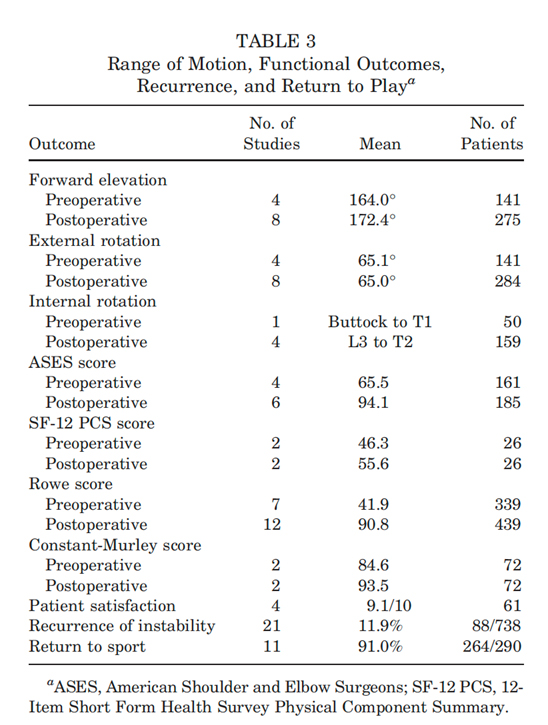
Figure 10. Example of reported outcomes. From: Chen AZ, Greaves KM, deMeireles AJ, Fortney TA, Saltzman BM, Trofa DP. Clinical Outcomes of Arthroscopic Bony Bankart Repair for Anterior Instability of the Shoulder: A Systematic Review. The American Journal of Sports Medicine. 2023;51(10):2758-2765.
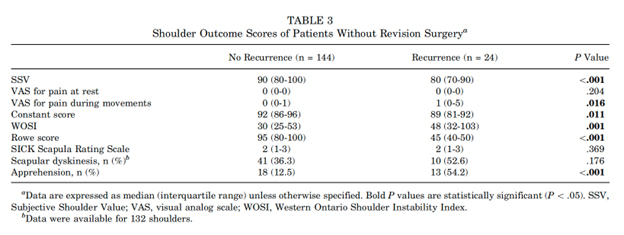
Figure 11. Example of reported outcomes. From: Do A, Scheibel M, Moroder P, Hayta A, Akgun Demir I, Paksoy A, Akgün D. Long-term Outcomes of a Contemporary Arthroscopic Bankart Repair Technique in Patients With Traumatic Anterior Shoulder Instability: A Minimum 10-Year Follow-up. Am J Sports Med. 2025 Aug;53(10):2298-2305. doi: 10.1177/03635465251351293. Epub 2025 Jul 7. PMID: 40620132; PMCID: PMC12311240.
Return to work/sport after surgery for shoulder instability?
The large majority of patients return to work and sport after surgery for shoulder instability. Following the Latarjet procedure, systematic reviews report return-to-work rates over 89% (ranging from about 89% to 100% across studies), with an average time to return to work ranging from roughly 9 to 35 weeks depending on the physical demands of the job and whether the surgery was a primary or revision procedure.15 Return to sport after Latarjet is also high, reported at roughly 89% overall (about 73% returning to the same level of competition), with an average time to return to play of about 6 months (range approximately 3 to 8 months).14
After arthroscopic Bankart repair, return-to-play rates are similarly high, reported as high as 90% in competitive collegiate football players, and one structured functional and psychological return-to-play protocol reported that all athletes studied returned to sport for a full season, at an average of about 6.5 months after surgery, with a 6.5% redislocation rate on return.2,16 Overhead athletes, such as throwers, may have somewhat more variable outcomes and often require a more gradual, throwing-specific rehabilitation progression before returning to full competition.17 As with timing of surgery, the exact time to return to work or sport is individualized and depends on occupation or sport type, the specific procedure performed, and the patient's progress through rehabilitation.14,15
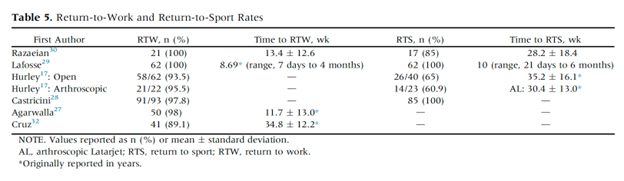
Figure 12. Example of return to work and return sports rates. From: Lee, M.S., Patel, S.M., Klug, T., Moran, J., Park, N., Mahatme, R.J., Fong, S., Gillinov, S.M., Dawes, A., Surucu, S., Graf, A. and Jimenez, A.E. (2025), Over 89% of Patients Return to Work After Undergoing Arthroscopic or Open Latarjet Procedure for Anterior Shoulder Instability: A Systematic Review. Arthroscopy, 41: 2611-2620.
What are the complications after surgery for shoulder instability?
Overall, surgery for anterior shoulder instability is safe, and serious complications are uncommon. A recent systematic review of arthroscopic Bankart repair found an overall complication rate of well under 1% (0.67%), with the most common issue being postoperative stiffness or "frozen shoulder" (occurring in roughly 0.2% to 0.3% of patients); other reported complications included persistent pain, hardware-related irritation or breakage, nerve injury (about 0.07%), and infection, though wound infections were rare.18 Recurrent instability (the shoulder dislocating or subluxating again) is really considered separately from these "surgical" complications and is discussed in the outcomes sections above.9,18
Bone-block procedures such as the Latarjet carry a somewhat higher overall complication rate, reported in various series from roughly 6% up to 20% or more, particularly in older patients or those undergoing revision surgery.14,18 Reported issues specific to this procedure include hardware irritation or breakage, incomplete healing (nonunion), resorption of the transferred bone graft, nerve injury, and a risk of developing or worsening shoulder arthritis over time.14 As with any shoulder surgery, other general risks, such as bleeding, anesthesia-related complications, and blood clots, are possible but uncommon. This is not an exhaustive list of every possible complication, and other complications, although rare, can still occur.
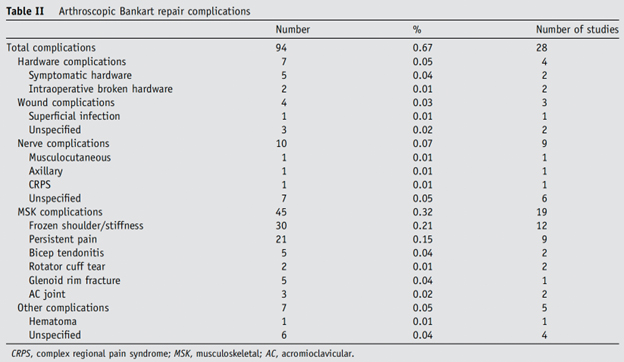
Figure 13. Examples of possible post operative complications. From: Rodriguez K, Hurley ET, Park CN, Bulleit C, Levin JM, Klifto CS, Dickens JF, Lau BC. Complications following arthroscopic Bankart repair: a systematic review. J Shoulder Elbow Surg. 2024 Feb;33(2):435-440. doi: 10.1016/j.jse.2023.08.013. Epub 2023 Sep 27. PMID: 37774834.
Do I need to use a sling after surgery?
Yes. After any of the surgical procedures described in this guide, the arm is protected in a sling for a period of time to allow the repaired tissue to heal. The exact duration depends on the specific procedure performed and the quality of the tissue repaired: many arthroscopic soft-tissue (Bankart) repairs use a sling for approximately 3 to 6 weeks, with some accelerated protocols using as little as 3 weeks for straightforward cases.11,19 More involved procedures, such as those combined with remplissage, a bone-block (Latarjet) procedure, or revision surgery, may call for a longer period of protection, and in some complex or revision cases a more rigid "gunslinger"-style brace may be used instead of a standard sling.19
You will typically be allowed to remove the sling briefly for hygiene, dressing changes, and specific therapy exercises as instructed by your surgeon and physical therapist, but the sling should otherwise be worn as directed until you are cleared to progress out of it at a follow-up visit.19
When can I return to driving after surgery?
There is no single test that definitively determines when it is safe to return to driving after shoulder surgery, and the specific literature on return-to-driving timelines after surgery for anterior shoulder instability is limited. In general, the same principles that apply after other shoulder and upper-extremity procedures are reasonable to apply here: you should not be taking narcotic or other sedating pain medication when driving, and you should have regained enough comfort, strength, and range of motion in the operative arm to comfortably and safely control the steering wheel and perform an emergency maneuver if needed. Practically speaking, this generally means driving is not resumed until you are out of your sling for comfort and cleared by your surgeon, which is commonly in the range of several weeks after surgery but varies with the procedure performed and individual recovery.
Post operative Instructions
- Following your stay in the recovery room and when your vital signs are stable you will be discharged to your escort.
- Remember, it is normal to feel a little dizzy or drowsy for several hours after surgery. This is due to the action the medicine used during surgery.
- If you do not have a post operative appointment scheduled, please call the office as soon as possible to schedule this appointment.
- Take your pain medicine as directed. Begin the pain medicine before you start getting uncomfortable, as the nerve block will wear off. If you wait to take your pain medication until the pain is severe, you will have more difficulty in controlling the pain.
- If you are taking narcotic pain medication you may need a stool softener to prevent constipation. Over-the-counter medication such as Docusate or Milk of Magnesia is recommended.
- Notify the office of any fever, chills, or temperature > 100.5.
- Notify the office of any wound drainage.
Post-Surgery Diet
- Resume your diet as tolerated and include vegetables, fruits, and proteins (such as meats, fish, chicken, nuts, and eggs) to promote healing. Also, remember to have adequate fluid intake. It is common after surgery to lack an appetite. This may be the result of anesthesia and the medications. Proper nutrition is needed for healing. During the healing process, the body needs increased amounts of calories and protein. Eat a variety of foods to get all the calories, proteins, vitamins, and minerals you need. If you have been told to follow a specific diet, please follow it.
How should I manage my surgical site, dressing and steri-strips?
- You can remove your surgical dressing on the third day after your surgery.
- Allow the steri-strips to fall off on their own. If necessary, sutures will be removed at your first post-operative visit.
Example of Steri strips: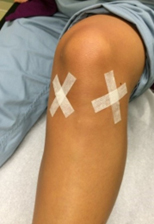
- You may shower with a waterproof bandage in three days, but keep the incisions dry until the sutures are removed in seven to ten days. Try not to let the direct spray of water from the showerhead hit the incision.
- You can cover your incision with a bandage if needed to prevent irritation with clothing.
- A small amount of drainage from the surgical sites is common. If this occurs, you may apply a bandage to the affected area.
- You may also have skin glue used on the skin. If present, it will fall off on its own over time.
- Leakage immediately after surgery is normal and helps to drain some of the fluid that accumulates in the joint during surgery.
- The dressings may become moist or blood-stained; this is normal and usually not a cause for alarm.
Example of waterproof bandage: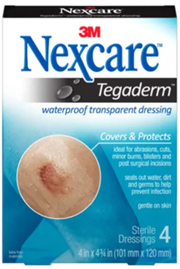
What is my activity level after surgery?
- You will use a sling for 3-6 weeks after surgery. It is okay to remove the sling for showers. You should not be lifting with the shoulder. You are also encouraged to move your fingers as tolerated.
Can I smoke following surgery?
- You should not smoke after surgery as it interferes with healing.
Questions or Concerns
If at anytime you have questions or concerns you can either contact your surgeon’s medical assistant via email or you can call the main office numbers at: 855-624-3306. You can also use the electronic medical record’s online portal to send questions.
Example rehabilitation protocol:
Diagnosis: Arthroscopic Bankart/SLAP Repair +/- Capsulorrhaphy
Sling with Abd pillow × 6 Weeks (SLEEP INCLUDED - remove pillow at Week 4)
For SLAP Repair - NO resisted Biceps × 4 Weeks
| Post-OP Week 1-2: | Begin: |
|---|---|
| Goals: |
|
| Exercises: |
|
| Post-OP Week 3-4: | Begin: |
|---|---|
| Goals: |
|
| Exercises: |
|
| Post-OP Week 5-6: | Begin: |
|---|---|
| Exercises: |
|
| Post-OP Week 7-12: | Begin: |
|---|---|
| Goals: |
|
| Exercises: |
|
| Post-OP Week 12-24: | Begin: |
|---|---|
| Goals: |
|
| Exercises: |
|
References
- Ladd LM, Crews M, Maertz NA. Glenohumeral joint instability: a review of anatomy, clinical presentation, and imaging. Clin Sports Med. 2021;40(4):585-599.
- Thompson SR, Menzer H, Brockmeier SF. Anterior shoulder instability. In: DeLee, Drez, & Miller's Orthopaedic Sports Medicine. 5th ed. Philadelphia, PA: Elsevier; 2020:chap 40, 440-462.
- Freehill MT, Gao I, St Pierre P. Anterior instability: epidemiology, history, physical examination, imaging, and nonoperative treatment. In: Rockwood and Matsen's The Shoulder. 6th ed. Philadelphia, PA: Elsevier; 2022:chap 30, 493-523.
- Almajed YA, Hall AC, Gillingwater TH, Alashkham A. Anatomical, functional and biomechanical review of the glenoid labrum. J Anat. 2022;240(5):761-771.
- Patrick CM, Snowden J, Eckhoff MD, Green CK, Scanaliato JP, Dunn JC, Parnes N. Epidemiology of shoulder dislocations presenting to United States emergency departments: an updated ten-year study. World J Orthop. 2023;14(9):690-697.
- Weisberg Z, Cole W, Rumps MV, Vopat B, Mulcahey MK. Bony Bankart lesion: diagnosis, management, and outcomes. JBJS Rev. 2024;12(5):e23.00200.
- Polio W, Brolin TJ. Remplissage for anterior shoulder instability: history, indications, and outcomes. Orthop Clin North Am. 2022;53(3):327-338.
- Moroder P, Akgün D, Paksoy A, et al. The global track concept for assessment of engaging Hill-Sachs defects in anterior shoulder instability. Am J Sports Med. 2024;52(5):1292-1298.
- Hurley ET, Matache BA, Wong I, et al; Anterior Shoulder Instability International Consensus Group. Anterior shoulder instability part I: diagnosis, nonoperative management, and Bankart repair-an international consensus statement. Arthroscopy. 2022;38(2):214-223.
- Schulz WR, Lopez RJ, Marigi IM, Crowe MM, Camp CL, Tagliero AJ, Marigi EM. Approach to treating patients after first-time anterior shoulder instability: what does the evidence say? Curr Rev Musculoskelet Med. 2025;18:658-668.
- Cordasco FA, Eliasberg CD, Gulotta LV, Fabricant PD. Anterior instability: arthroscopic surgery and outcomes. In: Rockwood and Matsen's The Shoulder. 6th ed. Philadelphia, PA: Elsevier; 2022:chap 31, 524-536.
- Arciero RA, Levy BJ. Anterior instability-open surgery: primary and revision with outcomes. In: Rockwood and Matsen's The Shoulder. 6th ed. Philadelphia, PA: Elsevier; 2022:chap 32, 537-545.
- Hurley ET, Matache BA, Wong I, et al; Anterior Shoulder Instability International Consensus Group. Anterior shoulder instability part II: Latarjet, remplissage, and glenoid bone-grafting-an international consensus statement. Arthroscopy. 2022;38(2):224-233.
- Provencher MT, Midtgaard KS, Ridley TJ, Douglass BW, Peebles LA, Tokish JM. Anterior instability-bone augmentation surgery: primary and revision outcomes. In: Rockwood and Matsen's The Shoulder. 6th ed. Philadelphia, PA: Elsevier; 2022:chap 33, 546-560.
- Lee MS, Patel SM, Klug T, et al. Over 89% of patients return to work after undergoing arthroscopic or open Latarjet procedure for anterior shoulder instability: a systematic review. Arthroscopy. 2025;41(7):2611-2620.
- Kelley TD, Clegg S, Rodenhouse P, Hinz J, Busconi BD. Functional rehabilitation and return to play after arthroscopic surgical stabilization for anterior shoulder instability. Sports Health. 2022;14(5):733-740.
- Harada Y, Iwahori Y, Kajita Y, Takahashi R, Yokoya S, Sumimoto Y, Deie M, Adachi N. Return to sports after arthroscopic Bankart repair on the dominant shoulder in overhead athletes. J Orthop Sci. 2022;27(6):1240-1245.
- Rodriguez K, Hurley ET, Park CN, Bulleit C, Levin JM, Klifto CS, Dickens JF, Lau BC. Complications following arthroscopic Bankart repair: a systematic review. J Shoulder Elbow Surg. 2024;33(2):435-440.
- Hill JR, Motley J, Keener JD. Rehabilitation after shoulder instability surgery. Phys Med Rehabil Clin N Am. 2023;34(2):409-425.
- Masud S, Momtaz D, Betsch M, et al. A comprehensive comparison and evaluation of surgical techniques for anterior shoulder instability: a Bayesian network meta-analysis. J Shoulder Elbow Surg. 2023;32(10):e531-e547.
- Rosenberg SI, Padanilam SJ, Pagni BA, Tjong VK, Sheth U. A lower Instability Severity Index score threshold may better predict recurrent anterior shoulder instability after arthroscopic Bankart repair: a systematic review. J ISAKOS. 2021;6(5):295-301.
- Adriani M, Saccomanno MF, Bergomi A, De Filippo F, Daffara V, Milano G. Accuracy and reliability of imaging modalities for studying bipolar bone loss in anterior shoulder instability: a systematic review. Knee Surg Sports Traumatol Arthrosc. 2025;33(5):1844-1852.
- Kearney RS, Ellard DR, Parsons H, et al; ARTISAN collaborators. Acute rehabilitation following traumatic anterior shoulder dislocation (ARTISAN): pragmatic, multicentre, randomised controlled trial. BMJ. 2024;384:e076925.
- Matache BA, Hurley ET, Wong I, et al; Anterior Shoulder Instability International Consensus Group. Anterior shoulder instability part III: revision surgery, rehabilitation and return to play, and clinical follow-up-an international consensus statement. Arthroscopy. 2022;38(2):234-242.
- Rhee SM, Woo CW, Kim CH, Kim DH, Rhee YG. Anterior shoulder instability with epilepsy: Bankart repair versus Latarjet procedure. Clin Orthop Surg. 2025;17(1):157-165.
- Wilbur RR, Shirley MB, Nauert RF, LaPrade MD, Okoroha KR, Krych AJ, Camp CL. Anterior shoulder instability in throwers and overhead athletes: long-term outcomes in a geographic cohort. Am J Sports Med. 2022;50(1):182-188.
- Li ZI, Hurley ET, Garra S, Blaeser AM, Markus DH, Shen M, Campbell KA, Strauss EJ, Jazrawi LM, Gyftopoulos S. Arthroscopic Bankart repair versus nonoperative management for first-time anterior shoulder instability: a cost-effectiveness analysis. Shoulder Elbow. 2024;16(1):59-67.
- Wu C, Xu J, Fang Z, et al. Arthroscopic dynamic anterior stabilization using either long head of the biceps or conjoined tendon transfer for anterior shoulder instability results in a similarly low recurrence rate. Arthroscopy. 2023;39(7):1618-1627.
- Brinkman JC, Damitio E, Tokish JM. Arthroscopic management of the contact athlete with anterior instability. Clin Sports Med. 2024;43(4):601-615.
- Hwang ST, Horinek JL, Ardebol J, Menendez ME, Denard PJ. Arthroscopic remplissage for the treatment of anterior shoulder instability: current and evolving concepts. JBJS Rev. 2022;10(11):e22.00151.
- Delgado C, Luengo-Alonso G, Valencia M, Martinez-Catalan N, Calvo E. Association of instability history and off-track Hill-Sachs lesions in anterior shoulder instability. Orthop J Sports Med. 2023;11(11):23259671231213858.
- Kang Y, Wang L, Wang M, Wei Y, Li Y, Jiang J, Yu S, Zhao J, Xie G. Bankart repair with transferred long head of the biceps provides better biomechanical effect than conjoined tendon transfer in anterior shoulder instability with 20% glenoid defect. Arthroscopy. 2022;38(9):2628-2635.
- Wu C, Ye Z, Lu S, Fang Z, Xu J, Zhao J. Biomechanical analysis reveals shoulder instability with bipolar bone loss is best treated with dynamic anterior stabilization for ontrack lesions and with remplissage for off-track lesions. Arthroscopy. 2024;40(7):1982-1993.
- Malmberg C, Andreasen KR, Bencke J, Kjaer BH, Holmich P, Barfod KW. Biomechanical and neuromuscular characteristics in patients with traumatic anterior shoulder instability undergoing arthroscopic Bankart repair: a clinical prospective cohort study protocol. BMJ Open. 2024;14(3):e078376.
- Menendez ME, Barth J, Tokish JM. Clinical faceoff: Latarjet versus free bone block procedures for anterior shoulder instability. Clin Orthop Relat Res. 2022;480(9):1657-1661.
- Monk AP, Crua E, Gatenby GC, Walsh AJ, Stanley JC, Rosenfeldt MP, Twaddle BC, Walsh SJ. Clinical outcomes following open anterior shoulder stabilization for glenohumeral instability in the young collision athlete. J Shoulder Elbow Surg. 2022;31(7):1474-1478.
- Maiotti M, De Vita A, De Benedetto M, Cerciello S, Massoni C, Di Giunta A, Raffelini F, Lo Cascio R, Pirani P, Castricini R. Clinical outcomes and recurrence rate of 4 procedures for recurrent anterior shoulder instability: ASA, remplissage, open, and arthroscopic Latarjet: a multicenter study. J Shoulder Elbow Surg. 2023;32(5):931-938.
- Davey MS, Hurley ET, Gaafar M, Delaney R, Mullett H. Clinical outcomes in patients with humeral avulsion glenohumeral ligament lesions in the setting of anterior shoulder instability: a retrospective comparative study. Am J Sports Med. 2022;50(2):327-333.
- Chen AZ, Greaves KM, deMeireles AJ, Fortney TA, Saltzman BM, Trofa DP. Clinical outcomes of arthroscopic bony Bankart repair for anterior instability of the shoulder: a systematic review. Am J Sports Med. 2023;51(10):2758-2765.
- Haskel JD, Wang KH, Hurley ET, Markus DH, Campbell KA, Alaia MJ, Millett PJ, Jazrawi LM. Clinical outcomes of revision arthroscopic Bankart repair for anterior shoulder instability: a systematic review of studies. J Shoulder Elbow Surg. 2022;31(1):209-216.
- Mengers SRP, Knapik DM, Kaufman MW, Edwards G, Voos JE, Gillespie RJ, Karns MR. Clinical outcomes of the traditional Latarjet versus the congruent arc modification for the treatment of recurrent anterior shoulder instability: a meta-analysis. Orthop J Sports Med. 2021;9(10):23259671211030204.
- Thamrongskulsiri N, Limskul D, Tanpowpong T, Kuptniratsaikul S, Itthipanichpong T. Clinical outcomes, union rates, and complications of screw versus button fixation in the Bristow-Latarjet procedure for anterior shoulder instability: a systematic review and metaanalysis. Clin Orthop Surg. 2023;15(6):1000-1012.
- Karasuyama M, Kawakami J, Yamamoto S, Ariie T, Tsuruta T, Minamikawa T, Ohzono H, Moriyama H, Gotoh M. Clinical results of Bristow and Latarjet procedures in patients with anterior shoulder instability: a systematic review and meta-analysis. Cureus. 2025;17(9):e92782.
- Karasuyama M, Tsuruta T, Yamamoto S, Ariie T, Kawakami J, Minamikawa T, Ohzono H, Moriyama H, Gotoh M. Comparative efficacy of treatments for a first-time traumatic anterior shoulder dislocation: a systematic review and network meta-analysis. J Shoulder Elbow Surg. 2024;33(11):2505-2514.
- Rosello O, Barret H, Langlais T, Boileau P. Comparison of return to sports and competition after the arthroscopic Bristow-Latarjet procedure versus arthroscopic Bankart repair in adolescents with recurrent anterior shoulder instability. Am J Sports Med. 2024;52(6):1457-1463.
- Khoshaba R, Hughes KE, Knox JM, Tomesch AJ, Lystrup R, McNinch NL, Zaremski JL, Denq W. Conservative versus operative management of pediatric isolated anterior shoulder instability: a systematic review and meta-analysis. Cureus. 2026;18(1):e101704.
- Mirzayan R, Itoi E, Karpyshyn J, Wong IH, Di Giacomo G. Controversies in surgical management of anterior shoulder instability: state of the art. J ISAKOS. 2024;9(2):168-183.
- Tiao J, Kator J, Rosenberg AM, Wang KC, Stern BZ, Bienstock D, Hoang T, Gladstone JN. Conversion to arthroscopic surgery for anterior shoulder instability does not significantly increase patient out-of-pocket costs, but both conversion and initial operative management are twice as costly as isolated nonoperative management. Arthroscopy. 2025;41(10):3930-3938.e2.
- Park I, Shin SJ. Correlation of glenoid concavity with surgical failure after arthroscopic stabilization for recurrent anterior shoulder instability. Am J Sports Med. 2023;51(14):3845-3850.
- Singh M, Byrne R, Chang K, Nadella A, Kutschke M, Callanan T, Owens BD. Distal tibial allograft for the treatment of anterior shoulder instability with glenoid bone loss: a systematic review and meta-analysis. Am J Sports Med. 2025;53(1):210-216.
- Lorentz SG, Hurley ET, Meyer AM, Glover MA, Dickens JF, Provencher MT. Distal tibial allograft for the treatment of shoulder instability provides excellent results with low rates of recurrent instability: a systematic review of clinical and biomechanical studies. Arthroscopy. 2025;41(11):4804-4814.
- Makhni EC, Tramer JS, Anderson MJJ, Levine WN. Evaluating bone loss in anterior shoulder instability. J Am Acad Orthop Surg. 2022;30(12):563-572.
- Lanham NS, Davidson I, Graefe B, Updegrove G. Evaluation and management of anterior shoulder instability among football players. Curr Rev Musculoskelet Med. 2025;18(5):207-216.
- Hayden AC, Kelly JJ, Tagliero AJ. Evidence-based risk factors for failure of arthroscopic labral repair. Curr Rev Musculoskelet Med. 2026;19:36.
- Nazzal EM, Herman ZJ, Engler ID, Dalton JF, Freehill MT, Lin A. First-time traumatic anterior shoulder dislocation: current concepts. J ISAKOS. 2023;8(3):101-107.
- Collins LK, Cole MW, Savoie FH 3rd, Sherman WF, O'Brien MJ. Fixation devices for anterior shoulder instability. J Exp Orthop. 2023;10(1):51.
- Elkousy H, Edwards TB. Glenohumeral instability. In: Gartsman's Shoulder Arthroscopy. 3rd ed. Philadelphia, PA: Elsevier; 2019:chap 4, 89-132.
- Aydingoz U, Yildiz AE, Huri G. Glenoid track assessment at imaging in anterior shoulder instability: rationale and step-by-step guide. Radiographics. 2023;43(8):e230030.
- Hodakowski AJ, Hurley ET, Villarreal-Espinosa JB, Lorentz SG, Bradley TE, Rossi L, Lau B, Dickens JF, Bradley KE. High rates of return to play following surgical stabilization for shoulder instability in adolescent athletes: a systematic review. Arthroscopy. 2026;doi:10.1002/arj.70368.
- Bhatia DN, Malviya P. How does dynamic arthroscopic tracking compare with radiologic glenoid track for identification of on- and off-track lesions in anterior shoulder instability? J Shoulder Elbow Surg. 2024;33(1):23-31.
- Konigshausen M, Patzholz S, Coulibaly M, Nicolas V, Vandemeulebroecke M, Schildhauer TA, Seybold D. Instability and results after non-operative treatment of large anterior glenoid rim fractures: is there a correlation between fragment size or displacement and recurrence? Arch Orthop Trauma Surg. 2022;142(11):2727-2738.
- Jackson GR, Brusalis CM, Schundler SF, Sachdev D, Obioha OA, McCormick JR, Mameri ES, Kaplan DJ, Knapik DM, Chahla J, Verma NN. Isolated primary Latarjet procedures for anterior shoulder instability results in high rates of graft resorption and glenohumeral degenerative changes with low rates of failure at a minimum 2-year follow-up: a systematic review. Arthroscopy. 2024;40(2):581-591.
- Eren TK, Kaptan AY, Bircan R, Tosun MF, Kanatli U. Lesion prevalence and patient outcome comparison between primary and recurrent anterior shoulder instability. J Shoulder Elbow Surg. 2023;32(9):1812-1818.
- Lobao MH, Abbasi P, Murthi AM. Long head of biceps transfer to augment Bankart repair in chronic anterior shoulder instability with and without subcritical bone loss: a biomechanical study. J Shoulder Elbow Surg. 2022;31(5):1062-1072.
- Do A, Scheibel M, Moroder P, Hayta A, Akgun Demir I, Paksoy A, Akgun D. Long-term outcomes of a contemporary arthroscopic Bankart repair technique in patients with traumatic anterior shoulder instability: a minimum 10-year follow-up. Am J Sports Med. 2025;53(10):2298-2305.
- Schwihla I, Wieser K, Grubhofer F, Zimmermann SM. Long-term recurrence rate in anterior shoulder instability after Bankart repair based on the on- and off-track concept. J Shoulder Elbow Surg. 2023;32(2):269-275.
- Chin G, Kraeutler MJ, Batiste A, McCarty C, McCarty EC. Management of the in-season athlete with an anterior shoulder dislocation. J Shoulder Elbow Surg. 2024;33(12):2780-2790.
- Guity MR, Sobhani Eraghi A. Mid-term results of arthroscopic Bankart repair and remplissage for recurrent anterior shoulder instability in patients with a history of seizures. BMC Musculoskelet Disord. 2022;23:12.
- Steuer F, Marcaccio S, McMahon S, Como M, Charles S, Lin A. Minimizing risk of recurrent instability following surgical stabilization for anterior glenohumeral instability. Orthop Clin North Am. 2025;56(1):111-120.
- Duethman NC, Bernard CD, Leland D, Wilbur RR, Krych AJ, Dahm DL, Barlow JD, Camp CL. Multiple instability events at initial presentation is the major predictor of failure of nonoperative treatment for anterior shoulder instability. Arthroscopy. 2021;37(8):2432-2439.
- Wu C, Liu B, Xu C, Zhao S, Li Y, Xu J, Zhao J. Native glenoid depth and Hill-Sachs lesion morphology in traumatic anterior shoulder instability. Am J Sports Med. 2023;51(13):3374-3382.
- Hurley ET, Colasanti CA, Lorentz NA, Matache BA, Campbell KA, Jazrawi LM, Meislin RJ. No difference in outcomes after arthroscopic Bankart repair with remplissage or arthroscopic Latarjet procedure for anterior shoulder instability. Arthrosc Sports Med Rehabil. 2022;4(3):e853-e859.
- Novakofski KD, Melugin HP, Leland DP, Bernard CD, Krych AJ, Camp CL. Nonoperative management of anterior shoulder instability can result in high rates of recurrent instability and pain at long-term follow-up. J Shoulder Elbow Surg. 2022;31(2):352-358.
- Jegatheesan V, Patel D, Lu V, Domos P. Outcomes of primary Latarjet vs. revision Latarjet after prior surgery for anterior shoulder instability: a systematic review and metaanalysis. J Shoulder Elbow Surg. 2023;32(12):2599-2612.
- Stolwijk PJ, Verweij LPE, Kerkhoffs GMMJ, van Deurzen DFP, Priester-Vink S, Sierevelt IN, van den Bekerom MPJ. Patient-reported outcome measures show no relevant change between 1-year and 2-year follow-up after treatment for anterior shoulder instability: a systematic review. Arthroscopy. 2025;41(6):2090-2102.
- Fong S, Darby F, Patel S, Fox JD, Lee MS, Moran J, Gillinov SM, Norman M, Zhu J, Mahatme RJ, Apostolakos JM, Jimenez AE. Patients with seizure disorders undergoing surgery for recurrent anterior shoulder instability show variable rates of recurrence with seizures as the most common cause of failure: a systematic review. Arthroscopy. 2025;41(10):4249-4261.
- Eren I, Buyukdogan K, Yuruk B, Aslan L. Patients without re-dislocation in the short term after arthroscopic knotless Bankart repair for anterior shoulder instability may show residual apprehension and recurrence in the long term after 5 years. J Shoulder Elbow Surg. 2022;31(5):978-983.
- Paksoy A, Moroder P, Akgun D. Pediatric shoulder instability: epidemiology, etiology, diagnosis and treatment. Arch Orthop Trauma Surg. 2026;146:98.
- Colson CB, Lauck BJ, Cathey JM, Yow BG, Trasolini NA, Waterman BR, Reynolds AW. Progression to osteoarthritis after the surgical treatment of anterior shoulder instability: a systematic review and meta-analysis. Orthop J Sports Med. 2026;14(5):23259671261436437.
- Baker HP, Krishnan P, Meghani O, Athiviraham A, Ho S, Owens BD. Protective sport bracing for athletes with mid-season shoulder instability. Sports Health. 2023;15(1):104-111.
- Rutgers C, Verweij LPE, Priester-Vink S, van Deurzen DFP, Maas M, van den Bekerom MPJ. Recurrence in traumatic anterior shoulder dislocations increases the prevalence of Hill-Sachs and Bankart lesions: a systematic review and meta-analysis. Knee Surg Sports Traumatol Arthrosc. 2022;30(6):2130-2140.
- Eren TK, Aktas E, Kaptan AY, Ayanoglu T, Ulucakoy C, Kanatli U. Recurrent anterior shoulder instability in patients 40-60 years old. Accompanying injuries and patient outcomes of arthroscopic repair. J Orthop Sci. 2021;26(4):584-588.
- Herman ZJ, Reddy RP, Fails A, Lin A, Popchak A. Rehabilitation and return to sport following operative and nonoperative treatment of anterior shoulder instability. Clin Sports Med. 2024;43(4):705-722.
- Verdu C, Moril L, Lapena A, Ruiz M, Pagan A, Lizaur A. Results of anterior shoulder instability treatment with anterior labroligamentous periosteal sleeve avulsion lesion comparing arthroscopic Bankart repair with or without remplissage. J Shoulder Elbow Surg. 2026;35(1):e353-e362.
- Gowd AK, Liu JN, Polce EM, Agarwalla A, Garcia GH, Nicholson GP, Cole BJ, Romeo AA, Verma NN. Return to sport following Latarjet glenoid reconstruction for anterior shoulder instability. J Shoulder Elbow Surg. 2021;30(11):2549-2559.
- Shanmugaraj A, et al. Revision arthroscopic Bankart repair for anterior shoulder instability after a failed arthroscopic soft-tissue repair yields comparable failure rates to primary Bankart repair. HSS J. 2022;18(1):145-155.
- Alkhatib N, Abdullah ASA, AlNouri M, Alzobi OZA, Alkaramany E, Ishibashi Y. Shortand long-term outcomes in Bankart repair vs. conservative treatment for first-time anterior shoulder dislocation: a systematic review and meta-analysis of randomized controlled trials. J Shoulder Elbow Surg. 2022;31(8):1751-1762.
- Belk JW, Wharton BR, Houck DA, Bravman JT, Kraeutler MJ, Mayer B, Noonan TJ, Seidl AJ, Frank RM, McCarty EC. Shoulder stabilization versus immobilization for first-time anterior shoulder dislocation: a systematic review and meta-analysis of level 1 randomized controlled trials. Am J Sports Med. 2023;51(6):1634-1643.
- Velasquez Garcia A, Iida N, Kuroiwa T, Hsu KL, de Marinis R, Abdo G, Ekdahl M. Substantial influence of psychological factors on return to sports after anterior shoulder instability surgery: a systematic review and meta-analysis. Knee Surg Sports Traumatol Arthrosc. 2023;31(12):5913-5923.
- Jin H, Zhang G, Chen S, Tong Y, Shao W, Li T, Huang Y, Li J, Tang X. Surgical treatment is superior to conservative options in preventing recurrence of first-time anterior shoulder dislocation in adolescents and adults under 40 years of age: a systematic review and network meta-analysis. Arthroscopy. 2025;41(12):5364-5377.
- Sacolick DA, Williams RR, Wu SJ, Kraeutler MJ, McCulloch PC. Surgical treatment of anterior glenohumeral instability: a historical review. J Shoulder Elbow Surg. 2024;33(12):2766-2779.
- Boileau P, Clowez G, Bouacida S, Walch G, Trojani C, Schwartz DG. The arthroscopic Trillat procedure is a valuable treatment option for recurrent anterior instability in young athletes with shoulder hyperlaxity. Arthroscopy. 2023;39(4):948-958.
- Di Giacomo G, Piscitelli L, Marcello G. The Latarjet procedure for recurrent anterior shoulder instability in the contact athlete. Clin Sports Med. 2024;43(4):635-648.
- Charles S, Marcaccio S, Lin RT, Boden S, Nazzal EM, Hughes JD, Popchak A, Lesniak BP, Lin A. The Pittsburgh Instability Tool score predicts outcomes after arthroscopic anterior shoulder stabilization in patients with subcritical bone loss. Arthroscopy. 2025;41(10):3857-3868.
- Generoso TO, La Banca V, Gonzalez FF, Bonadiman JA, Pallone LV, Guadagnin EC, Garrigues GE, Gustafson JA, Metsavaht L, Leporace G. Three-dimensional kinematics in patients with anterior shoulder instability - a systematic review with meta-analysis. J Biomech. 2025;181:112543.
- Zhang M, Yang Z, Zhang B, Liu T, Yun X. Treatment of anterior shoulder instability: a bibliometric analysis. J Orthop Surg Res. 2022;17:23.
- Foster MJ, Hanson JA, Dornan GJ, Ernat JJ, Rakowski DR, Melugin HP, Vopat ML, Provencher MT, Millett PJ. Use of computed tomography in the evaluation of anterior shoulder instability: possible effect on surgical management. Am J Sports Med. 2023;51(6):1588-1595.
- Pascual-Leone N, Khilnani T, Eskew JR, Brusalis CM, Dines JS. When an isolated Bankart repair is not enough: comparing Latarjet versus augmentation with remplissage. Curr Rev Musculoskelet Med. 2026;19:58.
- Min KS, Horng J, Cruz C, Ahn HJ, Patzkowski J. Glenoid bone loss in recurrent shoulder instability after arthroscopic Bankart repair: a systematic review. J Bone Joint Surg Am. 2023;105(19):1815-1821.
- Arce G, Deimundo M, Previgliano JP. “Bankart repair and beyond. Anticipating difficulties and managing complications. Current concepts”. J Clin Orthop Trauma. 2025;62:102919.


